
At 2pm on November 25, a symposium on the television drama Small Town Remedy《小城良方》, jointly organized by the China Television Arts Committee and the Shanghai Municipal Radio and Television Bureau, was held in Beijing.
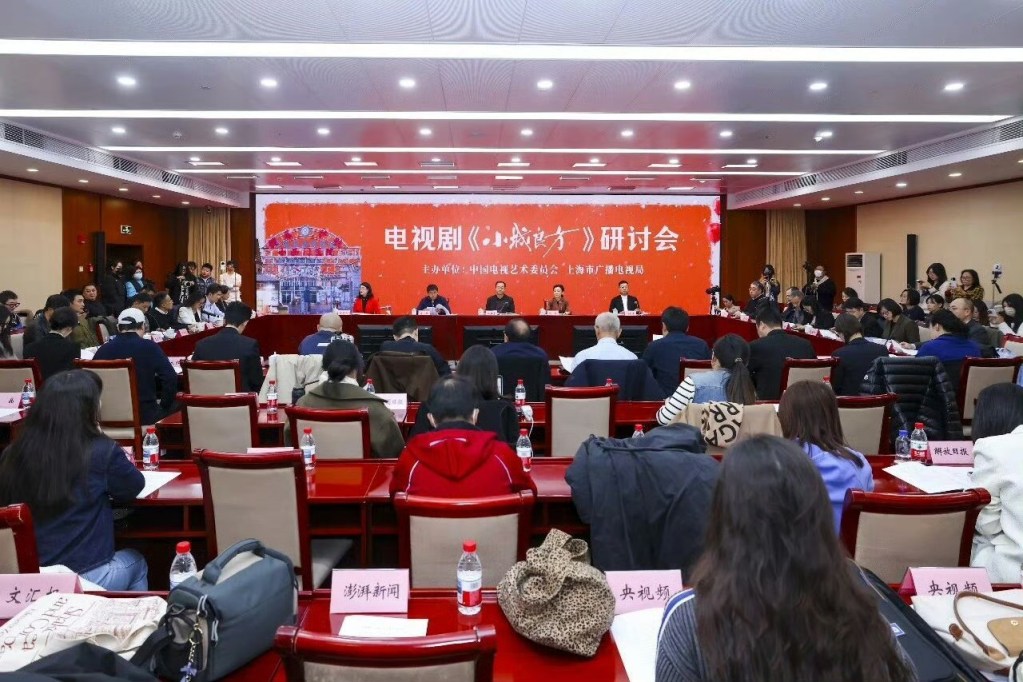


Relevant officials from the Publicity Bureau of the Taiwan Work Office of the CPC Central Committee; the Television Drama Department, International Cooperation Department and other relevant departments and directly affiliated institutions of the National Radio and Television Administration; the Publicity Department of the National Health Commission; the Film, Television Drama and Documentary Center of China Media Group; the Shanghai Municipal Administration of Culture and Tourism (Shanghai Municipal Radio and Television Bureau); the Shanghai Municipal Health Commission; and the Jinzhou Municipal People’s Government attended the meeting, along with representatives of the drama’s production and broadcasting organizations, members of the creative team, experts, scholars and media representatives. The meeting was chaired by Yi Kai, Secretary-General of the China Television Arts Committee.
In attendance:
- President of the Television Drama Company
- Director of the Publicity Department of the National Radio and Television Administration
- Leaders from the China International Communications Group
- Leaders from the National Health Commission and Shanghai Municipal Health Commission
- Leaders from the Shanghai Municipal Administration of Culture and Tourism
- Leaders from the Jinzhou Municipal Party Committee
- Leaders from China Central Television (CCTV)
- Chairman of Ningmeng Pictures
- Numerous experts from various fields, etc.
At the meeting, Zhang Han 张晗, Director of the Publicity Bureau of the Taiwan Work Office of the CPC Central Committee, stated that Small Town Remedy had received widespread recognition and positive reviews following its broadcast in Taiwan. Through its heartwarming and healing story, the drama fostered emotional resonance and mutual connection between compatriots on both sides of the Taiwan Strait. Through its vivid depiction of the local customs and culture of Northeast China, the drama has deepened Taiwanese audiences’ understanding of the mainland while creating opportunities to “travel in the footsteps of popular dramas” and further strengthen cross-Strait exchanges. He expressed hope that more outstanding film and television productions showcasing cross-Strait family bonds and the beauty of everyday life would be broadcast on both sides, promoting the preservation, inheritance and innovative development of Chinese culture.

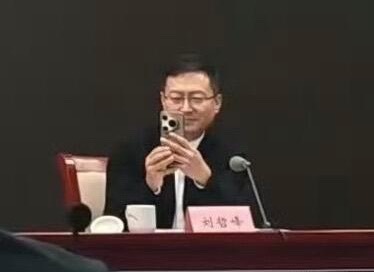
Feng Shengyong冯胜勇, Director of the Television Drama Department of the National Radio and Television Administration, commented that Small Town Remedy uses warm realism to portray grassroots healthcare and the everyday lives of ordinary people. It has enriched the representation of Northeast China on screen while also stimulating local cultural tourism and consumer spending.
He outlined several principles for producing high-quality television dramas:
Encourage cross-industry collaboration: Strengthen connections between television dramas, cultural tourism and other industries to achieve both social and economic benefits.
Stay connected to the times: Focus on contemporary themes and ground stories in grassroots life, using the everyday experiences of ordinary people to reflect broader social development.
Remain warm and realistic: Do not shy away from conflict, but neither exaggerate hardships nor exploit people’s anxieties. Instead, inspire audiences through kindness and hope.
Break away from conventional approaches: Broaden thematic perspectives, explore regional culture in depth, and create authentic characters through vivid storytelling. Read full speech here
Liu Zhefeng刘哲峰, Level II Inspector of the Publicity Department of the National Health Commission, stated that Small Town Remedy translates the principle of “respecting medical professionals and valuing healthcare” into genuine understanding of healthcare workers while also acknowledging the practical difficulties faced by patients. Through mutual understanding between doctors and patients, the drama highlights the value of humanism in medicine.
Strengthening grassroots healthcare requires not only improving infrastructure and remuneration but also paying attention to the compassion behind medical services. He expressed hope that more productions would take root in grassroots communities, allowing the public to see the realities of healthcare, local medical institutions and doctors, thereby fostering greater understanding and trust.
Xu Jingyi徐靖逸, Director of the Television Drama Division of the Shanghai Municipal Administration of Culture and Tourism and the Shanghai Municipal Radio and Television Bureau, stated that Small Town Remedy blends professional medical storytelling with the joys and sorrows of ordinary people, showcasing the compassion of medical practitioners and the warmth of people looking out for one another amid everyday life. The creation of this drama demonstrates that the emotional power of reality-based productions comes from a deep observation of life and a sincere understanding of their characters.
Wang Hao王浩, Deputy Director of the Project Department of the Film, Television Drama and Documentary Center of China Media Group, stated that Small Town Remedy uses intimate, small-town narratives to interpret the principles of being a good doctor and the warmth of human kindness, fully demonstrating the tremendous vitality of reality-based stories rooted in grassroots communities.
The drama upholds authenticity as the foundation of its storytelling, bringing together both professional and everyday realism and establishing a benchmark for authenticity and realism in professional workplace dramas. By innovating its humanistic storytelling and building a heartwarming core centered on mutual healing, the drama provides a new model for the innovative development of reality-based productions.
Yang Bei杨蓓, Senior Vice President of iQIYI, noted that Small Town Remedy uses solid medical expertise as the foundation for its heartwarming storytelling, evokes empathy through the imperfections and struggles of ordinary people and uses Northeastern-style humor to alleviate the heaviness of questions surrounding life and death. Through its vivid ensemble of characters and tightly woven narrative, the drama conveys the power of healing. Long-form television dramas should not only draw audiences into their stories but also leave them with something to look forward to in life.
Jiang Lixin江立新, Deputy Mayor of the Jinzhou Municipal People’s Government, stated that Jinzhou provided comprehensive support for the filming of the drama, connecting filming locations, local cuisine and cultural tourism resources to transform the drama’s popularity into cultural and tourism consumption, allowing both the production and the city to benefit from and strengthen one another.
Moving forward, Jinzhou will deepen the integration of “film and television + cuisine + cultural tourism + city branding,” make effective use of filming locations and studio resources, improve tourism services and transform Jinzhou from an internet-famous destination into a city with enduring popularity.
Su Xiao苏晓, Chairman of Linmon Media and the drama’s producer and executive producer, shared his creative reflections on Small Town Remedy around three themes: its underlying tone, its grassroots perspective and the foundation of its creative confidence.
He stated that the drama is grounded in the real-life circumstances of ordinary people, using human warmth to ease anxiety and the comforting familiarity of everyday life to embrace suffering, conveying both a resilient vitality and the warmth of healing.
Throughout the creative process, the team constantly reminded themselves to adopt a less elitist perspective and to use forms of expression that were closer to everyday life. Through the collective efforts of the creative team and the support of professional expertise, they strengthened the drama’s sense of realism. They hope to continue writing love letters dedicated to life, ordinary people and small towns.
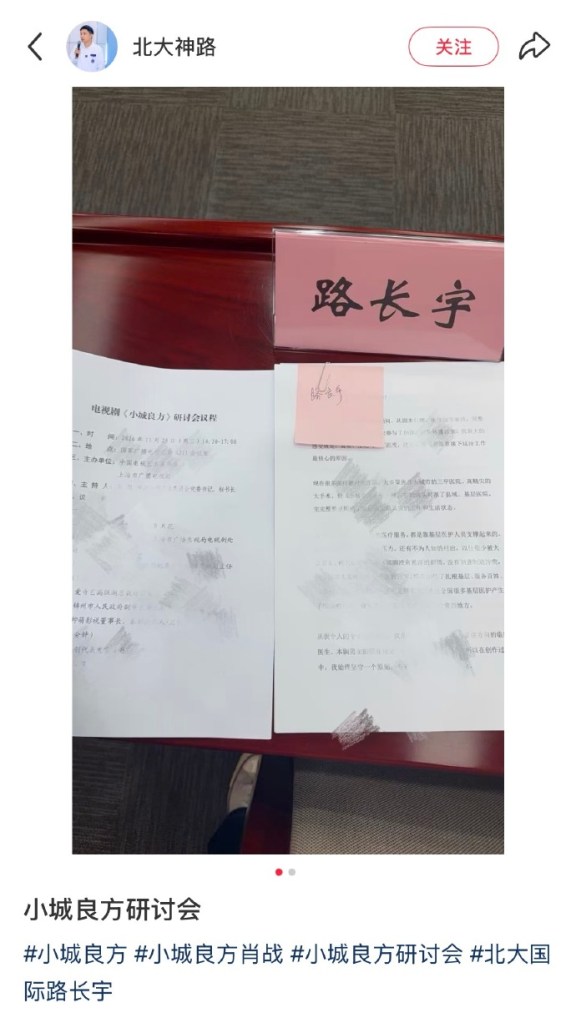
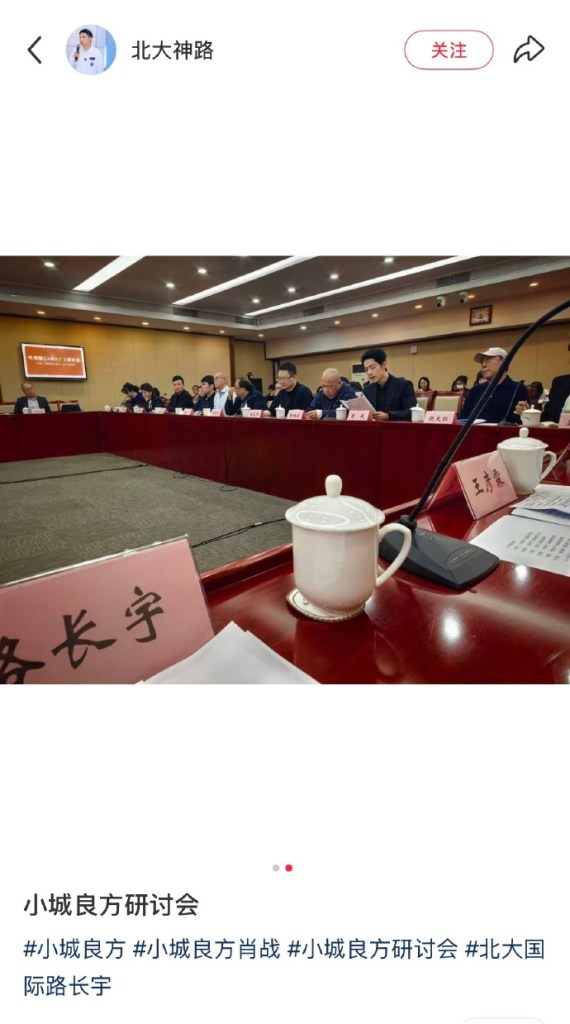
Lu Changyu路长宇, Deputy Director of the Department of Neurosurgery at Peking University International Hospital and the drama’s Chief Medical Consultant, noted that Small Town Remedy authentically portrays the work and lives of grassroots healthcare professionals, showcasing their original aspirations as medical practitioners committed to serving ordinary people in local communities.
Throughout the creative process, the team adhered to the principle of “maintaining professional accuracy and never misleading the audience.” They repeatedly verified diagnostic and treatment procedures, emergency medical operations and the details of doctor-patient communication, safeguarding the fundamental standard of authenticity in medical-themed productions.
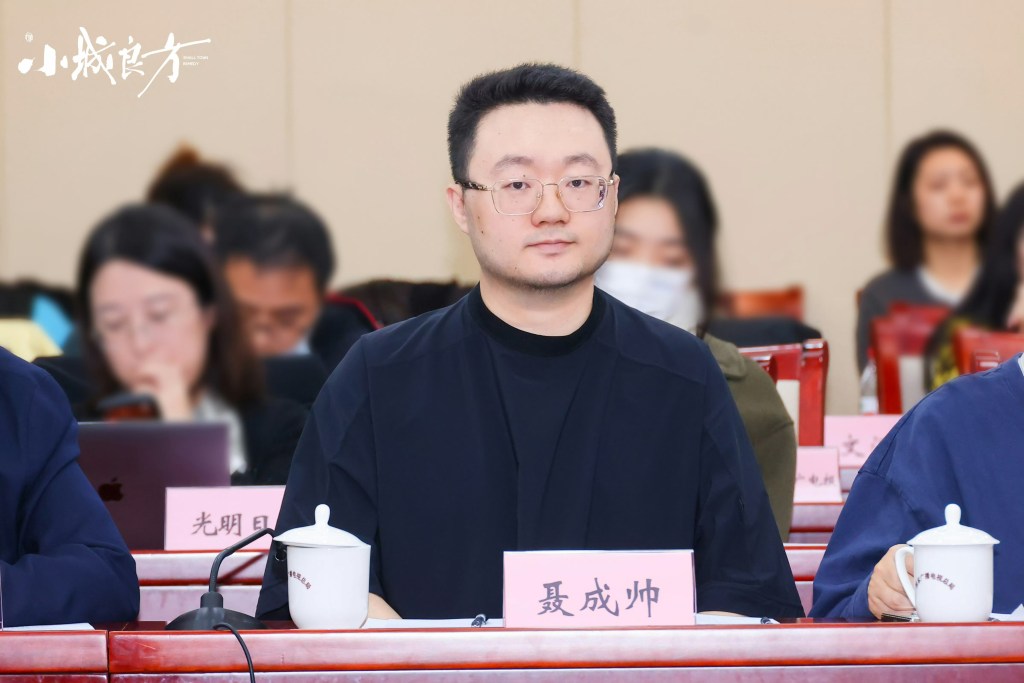
Nie Chengshuai聂成帅, the drama’s screenwriter and a representative of the creative team, stated that rather than making doctor-patient conflicts the primary attraction of the drama, the creative process focused on meticulously refining character relationships and the details of everyday life. By incorporating reflections on life and death, hometowns and human emotions, the drama portrays the warmth and coldness of human relationships rooted in the soil of China.
Zhang Xiaobo张晓波, the drama’s director, stated that a good medical drama is not about portraying miracle doctors; it is about portraying people. The drama maintains a narrative perspective that views ordinary people on equal footing, without deliberately magnifying conflict or tragedy, allowing kindness, compassion and companionship between people to become the “remedy” that heals the heart.
Xiao Zhan, who portrays Liu Zhengliang in the drama, stated that Liu Zhengliang is both a doctor and a “patient” who is healed by the warmth of everyday life in the small town. He strives to connect with the character through professionally accurate reactions and a relaxed, natural demeanor in everyday situations, allowing his performance to unfold organically and sincerely portraying the kindness and sense of responsibility of ordinary people. Read more here
Ni Dahong, who portrays Long Dongdong in the drama, noted that accumulated life experience is the foundation of character portrayal. Actors should abandon deliberate exaggeration and contrived comic effects, allowing their characters’ emotions to develop naturally through their mutual responses and interactions with fellow actors.
Jiang Yan, who portrays Ai Chen in the drama, shared her experience of immersing herself in the funeral services industry to gain firsthand knowledge of the profession. She expressed her hope to strike the right balance between professional conduct and personal emotions, portraying Ai Chen’s vitality and her determination to continue embracing life passionately despite the hardships she has endured.
Jian Renzi, who portrays Che Mingming in the drama, stated that practicing medicine and performing Errenzhuan (a traditional Northeastern Chinese folk performance art) are two paths through which the character saves others and herself. More moving than an emotional outburst is her resilience and willingness to continue living even after experiencing an emotional breakdown.
Zhang Guoqiang, who portrays Huang Dongsheng in the drama, stated that although his character experiences trauma and low points in life, he never loses sight of his original aspirations as a medical practitioner. The companionship and mutual healing between the characters demonstrate the authentic growth and unwavering dedication of grassroots healthcare professionals.
Wang Yanlin, who portrays Chen Junnan in the drama, stated that the character’s imperfections make him more authentic. He hopes that by revealing the pressure and vulnerability behind the character’s humor, audiences will gain a better understanding of the responsibilities, limitations and perseverance of grassroots doctors.
Experts including Zhong Chengxiang, member of the Central Research Institute of Culture and History and renowned literary and arts critic; Li Jingsheng, expert of the Review and Evaluation Group of the National Radio and Television Administration; Xu Jian, Deputy Editor-in-Chief of Literature and Art News; Yang Hongtao, Professor at the School of Theatre, Film and Television of the Communication University of China; Niu Mengdi, Professor at the School of Humanities and Social Sciences (School of Public Administration) of Beihang University; and Zuo Yanan, Professor at the School of Film and Television Arts of Liaoning Normal University, stated that the success of Small Town Remedy demonstrates the aesthetic appeal of long-form television dramas and their ability to captivate audiences.
Through its solid medical storytelling, vivid ensemble of characters and portrayal of life in which joy and sorrow intertwine, the drama showcases the warmth and power of realist storytelling.
The production breaks away from conventional approaches to Northeastern storytelling and homecoming narratives, transforming one’s hometown from a geographical place to return to into a place of spiritual solace. Through the reciprocal relationship between healing others and healing oneself, it portrays the journey of ordinary people learning to live with their trauma and reconcile with themselves.
The drama neither avoids real-life difficulties nor deliberately amplifies anxiety. Instead, it allows kindness to become part of the narrative and the smallest details to carry emotional weight. Amid the warmth and coldness of human relationships, it captures the resilience of life, highlighting the unique charm of long-form television dramas in their ability to delicately portray the human heart and gradually build emotional resonance.
The television drama Small Town Remedy follows the story of Liu Zhengliang, a medical genius who returns to his hometown after suffering a devastating career setback. Starting anew at a grassroots hospital, he writes one life prescription after another amid the warmth of everyday life, healing the hearts of both his patients and himself.
Since its premiere on CCTV-8 and iQIYI on October 21, the drama has achieved strong viewership results and received positive public acclaim.
Following a high‑profile seminar during the day, a celebratory banquet hosted by the platform took place in the evening, bringing the event to a successful close with both a professional symposium and a production team celebration all in one day.
Xiao Zhan’s Speech Transcript
Approximately 8 minutes
Distinguished leaders, respected experts and teachers, fellow members of the creative team, and friends from the media, good day!
I am actor Xiao Zhan, and I played Liu Zhengliang in Small Town Remedy. It is a great honour to be here today and take part in this symposium discussing the series.
Small Town Remedy is a realistic drama filled with deep affection, warmth, optimism and vitality. As a doctor, treating illnesses and saving lives is Liu Zhengliang’s duty and mission. Yet, at the same time, he is also a “patient” who is healed by the warmth of human connection and the everyday life of this small town. When life leaves him caught in a difficult position, this open-hearted little town embraces his poetic soul, opening his heart with an irreplaceable sense of belonging and genuine warmth.
Liu Zhengliang has never been a perfect person. The emotional distance he uses to protect himself can sometimes make him seem rather cold and even somewhat unlikeable. But his hometown, along with his equally imperfect family and friends, find warmth in one another and support each other as they navigate life in this small town.
The story of this small town touched me deeply from the very beginning. Ever since I first read the script, I had been thinking: As someone from southern China who isn’t particularly familiar with the Northeast, how could I convincingly portray Liu Zhengliang, a Northeastern boy who grew up in the South? Which parts of him should reflect his southern upbringing, and which aspects must remain deeply rooted in his Northeastern origins?
I remember that on the second day after arriving in Jinzhou last October, I got up early to experience the lively morning market. I stood by the roadside asking the locals for directions, had breakfast at the market, bought a roasted sweet potato and stood by the roadside eating it. In reality, nobody would give you a second glance simply because you spoke with a different accent. At that moment, I thought to myself: Perhaps Liu Zhengliang could do the same.
Looking back on the filming experience, I still feel particularly warm and amused when I think about those days surrounded by a group of Northeastern colleagues, being one of the few people from southern China on the production team.
Whenever we moved between shooting locations, all the actors would gather around the monitors. We would sit together in lively groups, either on set or inside the tents, chatting with the director about our characters, the filming, interesting things that had just happened during a scene, and how we should work together for the next one.
The Northeastern winter is truly cold, but even that couldn’t dampen the lively creative atmosphere on set.
Another distinctive characteristic of Northeastern people is that there’s never a shortage of conversation. Whether on screen or off, whenever we gathered together, everyone would chime in, talking animatedly about one thing or another. This relaxed and natural rapport helped me find my way into the character of Liu Zhengliang much more quickly.
The Northeastern accent is also highly contagious. So, not long after filming began, I found myself picking up the accent and sometimes having difficulty holding it back. During the early stages of filming, the director would remind me of this. He explained that Liu Zhengliang hadn’t yet fully accepted his Northeastern surroundings emotionally. At that point, he couldn’t naturally blend into the environment just yet, so I had to consciously restrain myself when performing.
As we all know, an unexpected turning point in Liu Zhengliang’s life left him unable to continue living in this part of the country. As a result, he was forced to move to the completely unfamiliar South.
Much of the awkwardness and contradictions in his personality stem from the fact that he never experienced a true sense of belonging while growing up: he couldn’t return to the North, yet he couldn’t quite fit into the South. So he gradually wrapped himself in layer upon layer of emotional protection, shielding himself from the outside world.
To bring the medical workplace as close to reality as possible, our screenwriters and director conducted extensive research and studied a vast number of real-life cases during the early preparation stages. This was to ensure that the professional details of the characters’ work were portrayed with great accuracy.
The director wanted to capture the most authentic representation of how medical professionals work. Therefore, to ensure the surgical scenes were realistic and the filming process ran smoothly, we maintained close communication with our medical consultants throughout production. We carefully prepared for every surgical scene, including how the medical staff should coordinate and assist one another during an operation. All of these procedures had to be practised and mastered in advance.
After filming every shot on the operating table, I would consult our professional medical advisers to confirm the techniques and procedures, as well as the proper conduct and movements required during surgery.
We often filmed all the scenes involving a particular operation within just two or three days. Although we were only simulating surgical procedures for the camera, every single movement and detail required our utmost concentration to ensure that the work was performed with precision and accuracy.
Every time I experienced the intensity and pressure of this working environment, my respect for the medical profession grew even deeper.
The responsibility and sense of mission behind the four words “saving lives and healing the wounded”, along with the constant pressure medical professionals have to face, are things we can hardly begin to imagine.
Therefore, I would also like to take this opportunity today to express my heartfelt gratitude to everyone working in the medical and healthcare professions.
Throughout the entire creative process, as an actor, I did my best to meet the professional standards required of me and pay attention to every detail. At the same time, I immersed myself completely in this city, becoming part of its people and surroundings.
As for everything else, I left room for what would naturally unfold on set, allowing myself to create and exchange ideas with the director and fellow actors. I didn’t impose any preconceived ideas. As the director mentioned earlier, I allowed everything to emerge naturally.
I believe this was the most authentic way to portray Liu Zhengliang, and it was also the most valuable lesson I learned from working with the Small Town Remedy production team.
Now, the series is called Small Town Remedy. What touched me most about this story is how it explores the relationship between people and their hometowns, as well as the relationship people have with themselves, all from a distinctive perspective.
The words “good remedy” have a meaning within the story: the medical skills used to treat illnesses and save lives. But beyond the story itself, I think they also represent an attitude towards life.
The series shows us how, even amid the seemingly trivial details of our everyday lives, we can face life’s uncertainties with courage while holding on to kindness and a sense of responsibility.
The small town healed Liu Zhengliang, and it has also had an impact on me. Often, what may seem like the second-best solution from one perspective can turn out to be the best possible choice in life when viewed from another.
As an actor, being able to encounter this kind of warmth and reflection, so deeply rooted in real life, through a character gives me a wonderfully reassuring sense of security, much like the comforting feeling of tucking your thermal underwear into your socks.
Liu Zhengliang will always remind me that the roots of creative work must remain firmly planted in real life.
Since the series aired, I have also read many comments and discussions from viewers.
Some people saw reflections of the medical professionals around them in the story. Others recognised their own past selves in the character’s inner conflicts and struggles. And some were even inspired by the series to make a special trip to Northeast China, experiencing firsthand the warmth, liveliness and everyday atmosphere portrayed in the drama.
When a story can connect with the genuine emotions of its audience, help more people recognise the dedication and hard work of grassroots medical professionals, and awaken people’s longing for their hometowns, allowing them to look back on the paths they have travelled with openness and acceptance, I believe that is the true power of a work of art.
At the same time, it is the audience who has given us creators the most precious feedback and the strongest support.
Throughout the broadcast of Small Town Remedy, just like the viewers, I immersed myself in the story of this small town from a completely new perspective, one that felt both close and distant. I encountered Liu Zhengliang and every other character, followed their journeys and destinies, experienced the strength and inspiration the series brought us, and discovered answers through the story itself.
To me, Small Town Remedy feels like a basket of steamed buns or a plate of dumplings lovingly prepared by one’s hometown for those who have left home.
It is filled with heartfelt anticipation. The moment it learns that you are on your way home, it mixes all its love into the dough and wraps it into every filling, waiting for you to finally put down your exhaustion and let go of your defenses.
It is also like a ship, open-hearted and broad-minded, sending you off on your journey. It tells you that as you travel far and wide in search of your destination, there is no need to hesitate. Just follow the rhythm of the song and keep moving forward.
I would like to thank every member of the team who took part in creating Small Town Remedy. Your enthusiasm was matched by the sincerity of your creative intentions, and together, you brought to life the kind of touching warmth that feels like having a hand warmer placed into your arms on a freezing winter day.
I would also like to thank all the experts and senior professionals here today for your valuable guidance. And to the many viewers who have embraced the stories of this small town, thank you as well. Every comment, every shared thought and every suggestion is something I will treasure and draw strength from as an actor.
As I continue my journey in the performing arts, I will carry with me the insights and strength that Small Town Remedy has given me. I look forward to meeting my next character and telling every story with sincerity.
Thank you, everyone!