
Original source │Audiovisual Pro │ November 25, 2026
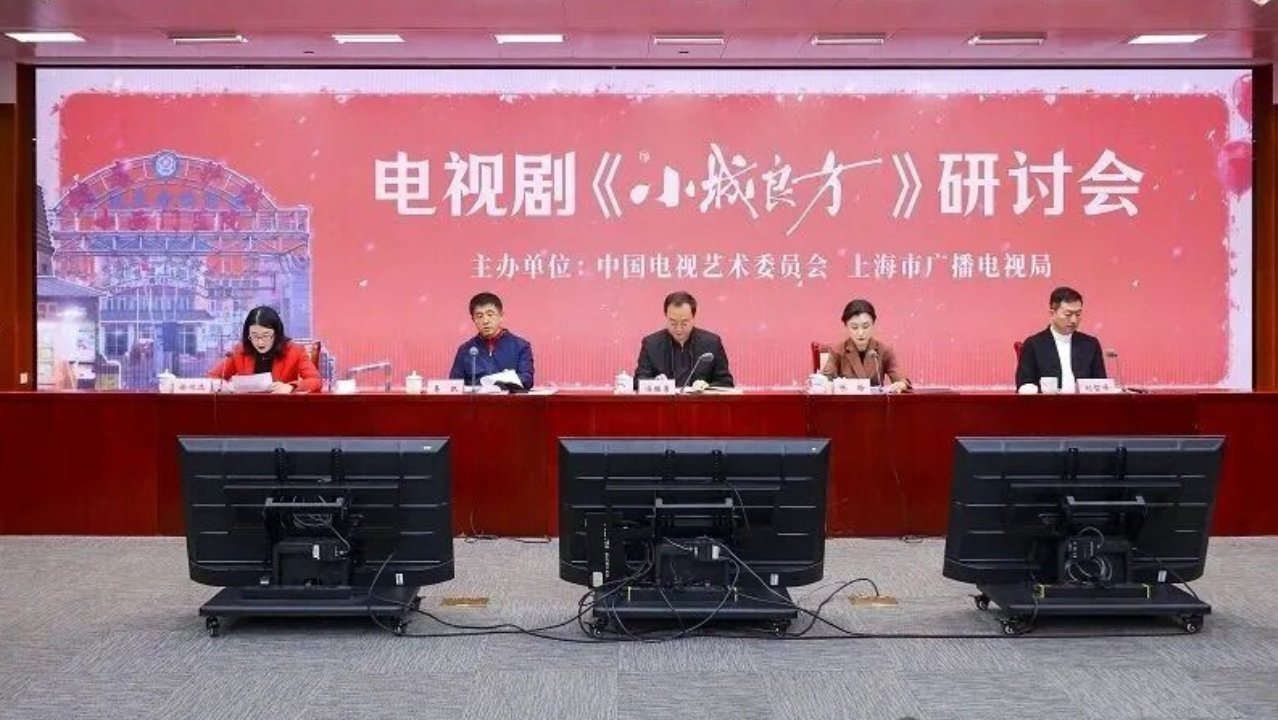
On the afternoon of November 25, Feng Shengyong, Director of the Television Drama Department of the National Radio and Television Administration (NRTA), attended the symposium for the television drama Small Town Remedy 《小城良方》. In his remarks, he pointed out that the drama breaks away from the traditional narrative framework of medical dramas by turning its attention to grassroots healthcare in a small town.
With its warm realist core, characterized by “the everyday warmth of life everywhere and vividly portrayed people from all walks of life,” the drama has become an exemplary medical production that demonstrates how a realistic television drama can be “small in scale yet refined, small in scale yet beautiful, and small in scale yet profound.”
He emphasized that realism does not mean focusing exclusively on suffering. While creative works should not shy away from conflict, they should not exaggerate people’s hardships or exploit their anxieties. Instead, they should adhere to three principles: “Portray reality without dwelling on suffering; pursue truth without being overly rigid; and evoke empathy without resorting to emotional manipulation.”
Regarding how to produce more outstanding television dramas based on real-life themes, he put forward four recommendations:
- Anchor stories in the spirit of the times, using small perspectives to reflect the bigger picture.
- Remain committed to warm realism and inspire audiences through humanistic values.
- Break away from conventional approaches and explore new creative directions with fresh perspectives.
- Promote diverse forms of integration and expand new opportunities for the radio, television and audiovisual industries through a broader industrial ecosystem.
Below is a summary of Director Feng Shengyong’s remarks, published with authorization by the WeChat public account “National Drama Communication” (国剧传播).
Full Remarks by Director Feng Shengyong
Distinguished experts, members of the creative team, colleagues and friends from the media,
Good afternoon!
I am delighted to attend this symposium and take this opportunity to reflect on the creative experience behind the outstanding production Small Town Remedy, as well as explore ways to promote the flourishing development of television dramas based on realistic themes.
General Secretary Xi Jinping has pointed out that socialist literature and art are, in essence, the literature and art of the people. There may be a hundred or even a thousand approaches to artistic creation, but the most fundamental, essential and reliable approach is to take root among the people and in everyday life.
Small Town Remedy breaks away from the traditional narrative framework of medical dramas, which typically revolve around “major urban Grade III Class A hospitals, critical emergency cases and elite medical professionals.” Instead, it turns its attention to frontline grassroots healthcare in a small town.
Through its ensemble portrayal of an ordinary hospital, ordinary doctors and ordinary patients, the drama conveys a warm realist core characterized by “the everyday warmth of life everywhere and vividly portrayed people from all walks of life.”
The production has managed to be accessible without becoming vulgar, substantial without becoming heavy-handed, and capable of using small stories to reflect the larger spirit of the times. It is an exemplary medical drama that is “small in scale yet refined, small in scale yet beautiful, and small in scale yet profound.”
The success of Small Town Remedy offers valuable lessons for the creation of realistic television dramas today.
1. Uphold the Script-Centred Approach and Embrace the Principle That Content Comes First
The screenplay underwent three years of refinement, while the creative team conducted extensive research and immersive visits to grassroots hospitals to gain firsthand experience.
The team abandoned the industry’s tendency to favour major intellectual properties (IPs) and grand-scale productions. They also moved away from the conventional formula of dressing up idol dramas with a different setting or relying on the familiar “strong female lead/strong male lead” formula.
Rather than deliberately giving characters an aura of exceptional importance or making them seem larger than life, the team created characters who feel like real people, have memorable personalities and cannot easily be reduced to stereotypical labels.
Take Liu Zhengliang, for example. After falling from his position at a prestigious Grade III Class A hospital in Shenzhen to working at a small-town health centre, he carries both professional trauma and a sense of pride that no longer quite fits his circumstances. Even by the end of the drama, he has not transformed into someone who can effortlessly navigate every situation or please everyone.
This kind of “growth without growth” is precisely where the screenplay demonstrates its strength. It replaces formulaic storytelling with restraint and dramatic twists with the natural logic of everyday life.
2. Preserve the Essence of Authenticity and Return to the Original Purpose of Realist Storytelling
The drama adopts an equal, eye-level perspective to explore the joys and sorrows of ordinary people. It does not shy away from real-life difficulties and directly addresses issues of public concern, particularly the anxieties experienced by younger generations surrounding returning to one’s hometown and the emotional complexity of going back to familiar surroundings after being away.
It genuinely immerses viewers in the professional and personal lives of grassroots healthcare workers, using authentic storytelling to resonate with audiences.
The drama neither exaggerates doctor-patient conflicts nor sensationalizes medical anxieties. At the same time, it does not gloss over the realities of limited medical resources, outdated equipment and staff shortages at grassroots healthcare facilities.
Instead, it uses the inherent openness and humour of Northeastern people as an underlying narrative language. Its philosophy of life, in which “laughter carries tears, and joy and sorrow share the same roots,” gives a lighter touch to questions surrounding life and mortality.
In doing so, it achieves three important principles: portraying reality without dwelling on suffering, pursuing truth without being overly rigid, and evoking empathy without resorting to emotional manipulation.
3. Explore Regional Culture in Depth and Bring Out Local Characteristics
The drama incorporates the distinctive openness, generous spirit and humanistic warmth of Northeast China into its characters and storytelling, creating a deep connection between regional identity and the heart of the narrative.
At a recent press conference held by the Taiwan Affairs Office of the State Council, it was mentioned that the popularity of Small Town Remedy had sparked a “Northeastern Dialect Listening Challenge” among audiences in Taiwan. This demonstrates the powerful emotional appeal and enduring vitality that can emerge when regional culture is integrated with film and television storytelling.
Jinzhou, where the drama was filmed, has also attracted considerable public attention following the production’s popularity.
Searches for Shiqiaozi Morning Market surged by 7,257%. Searches for nearby attractions such as Fengguo Temple and Qingyan Temple increased by 15,975% and 4,950% year-on-year, respectively.
Northeastern-style barbecue has become a popular dining choice among younger consumers, while the Northeastern dialect has gained widespread recognition and popularity across the internet.
These developments demonstrate that a successful production generates more than just television ratings and on-screen popularity. It can also translate into tangible real-world traffic and economic activity.
Since last year, the National Radio and Television Administration has implemented its “Dramas Enrich China” (剧耀中国) high-quality production initiative, focusing on five major directions to develop a series of outstanding television productions.
One of these directions, “The Warmth of Everyday Life” (人间烟火), focuses on the life experiences and struggles of ordinary people, showing how individual destinies resonate with the development of the times and promoting contemporary Chinese values.
Small Town Remedy is an excellent example of this kind of warm realist production.
We have consistently advocated, encouraged and supported television dramas that remain grounded in authenticity and uphold the principles of realist storytelling.
The Television Drama Department attached great importance to Small Town Remedy and provided ongoing guidance throughout its development. We worked with local radio and television authorities and health departments to carefully review the production, ensuring the professionalism and accuracy of its medical content.
We also established a fast-track review process, allowing the NRTA and provincial authorities to conduct their reviews simultaneously. The drama was included on the list of key productions receiving advance copyright protection alerts, helping combat piracy and copyright infringement.
In addition, we coordinated broadcasting platforms and promotional resources to secure an appropriate broadcast window, helping ensure that high-quality realistic productions could reach their intended audiences directly.
The drama also made excellent use of its expert advisory system. In addition to engaging professional medical consultants, the production invited grassroots healthcare workers to participate in screenplay discussions and on-site scene reviews. For example, the scene in which Liu Zhengliang delivers a baby was recognized and approved by medical professionals in the industry.
This model of organizing high-quality productions, characterized by “top-level guidance, industry-wide collaboration and clear responsibility on the part of production entities,” is not an intervention in the creative process. Rather, it provides support that helps outstanding productions succeed. It is a model worth continuing to promote.
Four Recommendations for Creating More Outstanding Realistic Television Dramas
I would like to share four recommendations with everyone on how to create more outstanding television dramas based on realistic themes.
01. Anchor Stories in the Spirit of the Times, Using Small Perspectives to Reflect the Bigger Picture
Literature and art serve as mirrors of their times, while outstanding works are answers to the questions posed by their times.
Truly outstanding productions must respond to the calls of the times and reflect their spirit.
The creation of realistic television dramas must actively engage with the broader direction of social development and remain closely connected to contemporary themes. It must move beyond the limitations of narratives that are overly personal, fragmented or focused exclusively on elite perspectives.
Creators should learn to observe the world through a single corner, reflect countless realities through one event, and reveal the lives of many through the experiences of one individual.
Creators must immerse themselves on the front lines, entering communities in both urban and rural areas and engaging with people across different industries. They should treat vivid, authentic everyday life as their primary source material, firmly rejecting imagined narratives detached from reality and fictional expressions that have little connection to people’s actual experiences.
They must also avoid the problem of producing “realistic dramas that are not actually realistic.”
By starting with seemingly small aspects of everyday life, such as people’s food, clothing, housing, transportation, neighbourhood interactions and routine medical experiences, creators can convey broader themes of national sentiment, the spirit of the times and social development.
Realistic television dramas should become vivid vehicles for documenting, celebrating and paying tribute to the times in which we live.
02. Remain Committed to Warm Realism and Inspire Audiences Through Humanistic Values
Realism does not mean focusing exclusively on suffering, just as authentic storytelling does not mean emphasizing only negative aspects of life.
Creative works should not shy away from conflict, but they must not exaggerate people’s hardships or exploit their anxieties.
We advocate warm realism that is compassionate, kind, hopeful and empowering.
Realistic dramas do not necessarily have to be serious, heavy or grand in scale. They can also be lighthearted, lively, warm and healing.
We must adhere to three principles: “Portray reality without dwelling on suffering; pursue truth without being overly rigid; and evoke empathy without resorting to emotional manipulation.”
While confronting the many realities of life, productions should also convey the value of perseverance, highlight the brilliance of human nature and bring people together through a shared sense of purpose.
Outstanding works should not only reflect the realities of the world around us, but also illuminate people’s hearts.
03. Break Away from Conventional Approaches and Explore New Creative Directions with Fresh Perspectives
Although realistic television dramas represent an established genre that attracts considerable audience interest, they can also become trapped in conventional approaches and increasingly homogeneous competition.
We must break away from habitual thinking, step outside our comfort zones and overcome the limitations of established genres.
While maintaining the right creative direction, authenticity to everyday life and a strong humanistic foundation, we must also broaden our narrative perspectives, diversify storytelling approaches and expand the boundaries of subject matter.
Creators should turn their attention to areas that have traditionally received insufficient coverage and explore new narrative possibilities.
Character stories should be organically integrated with themes such as grassroots development, changes in rural communities, regional culture and improvements in people’s livelihoods.
By using audiovisual languages that are more youthful, grounded in everyday life and contemporary, we can continuously enrich the range of subjects explored in Chinese television dramas.
04. Promote Diverse Forms of Integration and Expand New Opportunities for the Audiovisual Industry Through a Broader Industrial Ecosystem
Audiovisual storytelling should not be limited to what appears on screen. There is also considerable potential in extending and transforming the value of intellectual property (IP).
Small Town Remedy broke away from the conventional approach of waiting until after a drama airs to capitalize on its popularity through marketing. Instead, it explored a collaborative model characterized by “early-stage involvement, cross-departmental coordination and long-term IP development.”
During filming, Jinzhou recorded an almost 40% year-on-year increase in tourist arrivals over the New Year’s holiday period. During the drama’s broadcast, it continued to help drive growth in local cultural tourism.
We should further explore new approaches to integrating television dramas with cultural tourism experiences, creative cultural product development, public cultural education and other related industries.
By using high-quality television productions as a foundation, we should build a broader “Television Drama +” industrial ecosystem, enabling the radio, television and audiovisual industries to play a greater role in economic and social development.
In doing so, we can achieve an organic balance between cultural value, social benefits and economic returns.
Finally, I would once again like to congratulate the creative team behind Small Town Remedy and its broadcasting platforms.
I hope the creative team will regard this achievement as a new starting point, remain mindful of their artistic mission, stay committed to the people, and continue producing more outstanding television dramas with substance, integrity and warmth.
Together, we can promote the high-quality development of China’s television drama industry in the new era.