
Original source │GuiQuan │ September 13, 2019 │19:00

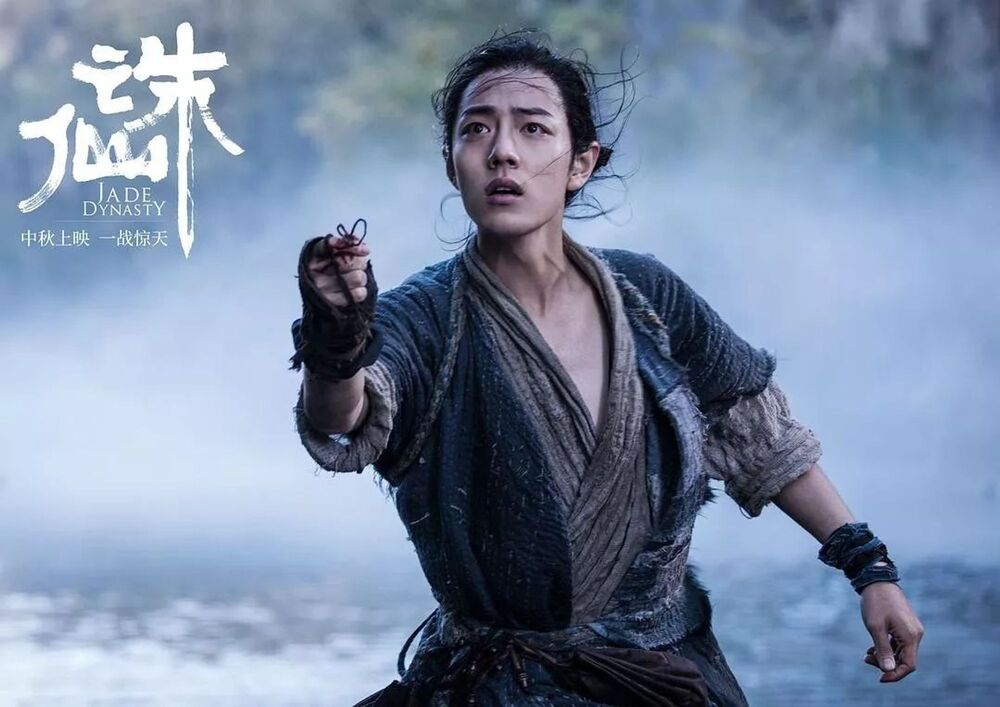
With the release of the film Jade Dynasty I (《诛仙I》), Xiao Zhan entered a new arena: he began facing the scrutiny of a much broader audience and truly joined the competition among actors.
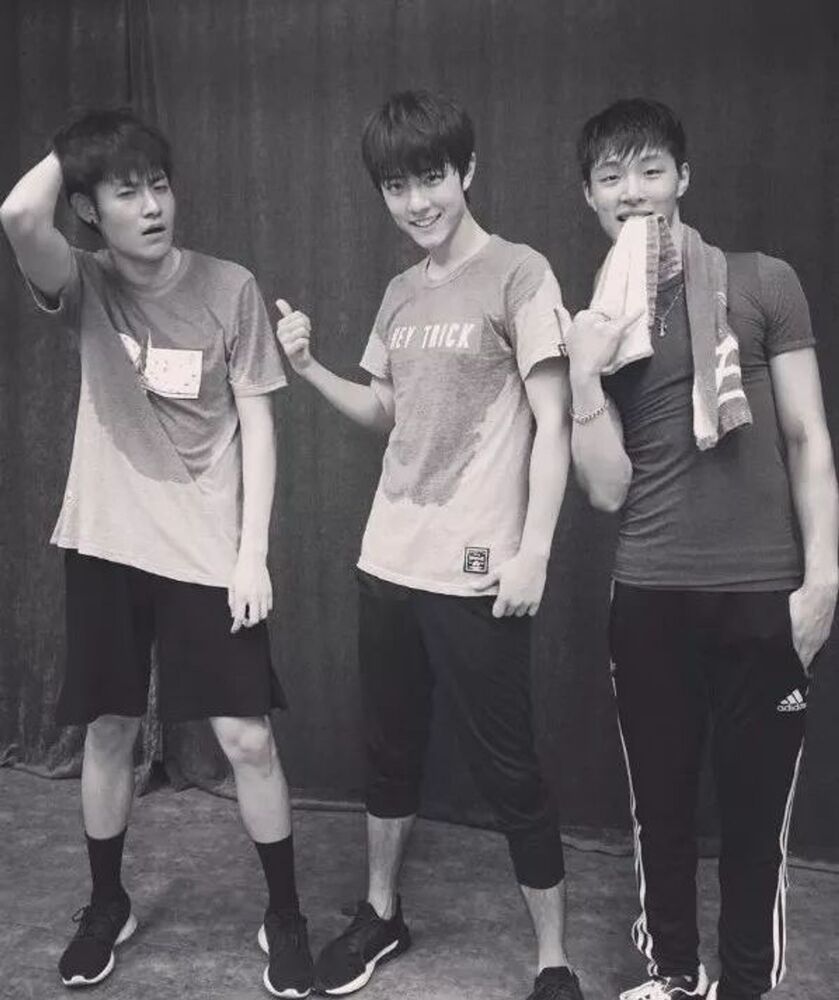
He has already switched tracks several times in his life. Originally, he was an ordinary young man who followed the path most people take—attending an ordinary university, studying a regular major, and finding a typical job after graduation. Then, at the age of 24, he unexpectedly got the opportunity to participate in a talent competition at what was considered a relatively “old” age for an idol trainee. He became a boy-group trainee, worked hard to learn dance, improved his singing skills, and gradually earned acting opportunities, starting from supporting roles.
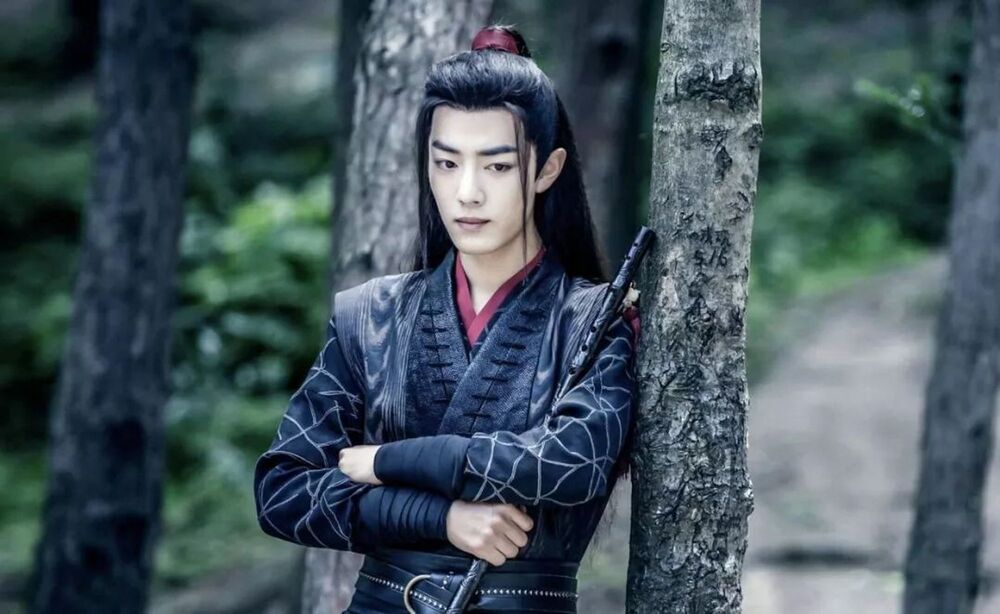
The web drama The Untamed《陈情令》in the summer of that year suddenly propelled him to the very top tier of the entertainment industry. His name became a regular fixture on trending searches, his Weibo following surpassed 17 million, he landed one major magazine cover after another, and numerous brand endorsements came his way.
The film Jade Dynasty, released during the Mid-Autumn Festival holiday, was clearly poised to become a crucial leap in his transition from a “traffic star” (an idol driven by popularity and online attention) to a recognized actor. There are countless paths for an entertainer’s career development, but within the current industry evaluation system, the one that most symbolizes status and prestige—even if it does not necessarily bring the most immediate practical benefits—remains the same: the big screen.
This is obviously something that fans care deeply about as well. Carrying a camera, a reporter from GuiQuan passed through multiple layers of security to reach the interview area and experienced fans’ attentiveness every step of the way: “Thank you for your hard work.” There were even gift packages. Inside kraft paper bags decorated with cartoon images of Xiao Zhan were products he endorsed—food, drinks, skincare items—as well as fan-made merchandise featuring his likeness, such as ticket holders, folding fans, and phone stickers.
However, by 2019, the formula of a major IP plus a young idol star was no longer a guarantee of box-office success. Numerous examples had already shown that the risks for “traffic stars” attempting to switch tracks were becoming increasingly high. In the current media environment, their safe zone often extends only vertically within their target fan base, separated from the broader public market by a significant gap. No matter how powerful the online presence of fandom communities may be, it is difficult to translate that influence into the viewing preferences of the general public in the real world. In some cases, it can even provoke resentment. Even when popularity-driven stars contribute to box-office performance, the public often perceives this conversion as coming at the cost of the celebrity’s personal reputation.
“Every day, I approached the work with a sense of reverence. On set, I was constantly nervous, but I found that very interesting. I’m working hard to move toward becoming a professional actor.”
During the interview, Xiao Zhan spoke about the acting profession with great respect. When asked about taking on future film projects, he said he would be even more cautious:
“Whether I can perform the role well, whether the subject matter is suitable, and whether the market will welcome it… If I have more opportunities to make films in the future, I think these are questions that need to be considered comprehensively.”
When he first started acting, Xiao Zhan still carried the burden of being an idol. He was always thinking about how to present his best side on camera:
“Do I look good on screen? Does my face look slimmer from this angle? Did I eat too much today—am I looking a bit puffy?”
Even when filming for The Untamed had just begun, he would arrive on set and first locate the camera positions, quietly making mental notes:
“The camera is over there. Okay, then I’ll try to angle myself this way a little.”
But gradually, he developed a different understanding of what “showing his best side” meant. Questions like “which side of my face looks better” no longer bothered him. Instead, his focus shifted to:
“What is the key point of this scene? Did I perform it well?”
He truly immersed himself in his characters. While reading scripts, he would cry uncontrollably, and his ability to empathize with the role replaced his fixation on his own image. During the filming of Jade Dynasty, he felt that from beginning to end, he was “living inside the movie, inside Zhang Xiaofan’s life.”
Fans often describe an actor’s ability to fully inhabit a role and move audiences through genuine emotion as “empathetic acting” (共情式演技).
Xiao Zhan explained the concept to GuiQuan:
“First, you have to make yourself believe it. If I need to perform a scene where a character is completely heartbroken and emotionally devastated, then I first have to make myself feel that devastation. Only then can the audience believe in the character.”
After watching The Untamed, a friend sent Xiao Zhan a message:
“The way you’re acting is too damaging to yourself. You can’t keep acting like this in the future.”
Looking back on it now, Xiao Zhan took the advice as a kind of compliment.
“Honestly, I felt pretty great about it.”
At least for now, his curiosity and competitive drive still outweigh any instinct for self-preservation, pushing him to give everything he has to his work. Technically speaking, however, he admits that he is still searching for ways to keep himself from being affected by a role after filming ends—especially when the character’s emotions are “extremely depressing” or “extremely heartbreaking.”
The Untamed was filmed during the summer. Temperatures inside the studio reached 40°C (104°F). Sweat would wash away the makeup, and four or five layers of costume stuck tightly to his body. Although the heat made it difficult to stay in character, as long as he could still stand, filming had to continue.
Filming Jade Dynasty, on the other hand, took place in the middle of winter.
For the scene in which Zhang Xiaofan falls into demonic possession, three industrial fans were aimed directly at Xiao Zhan to create the desired windswept visual effect. The shot looked exactly as intended, but the -20°C wind blasted straight into his face.
Recalling the experience, he said:
“After one take, I was done. It felt like my ears weren’t even there anymore—I couldn’t feel them. This side of my face had gone numb too. It felt like ice blades were slicing across my face.”
The contrast between the two productions was striking: one tested his endurance in extreme heat, the other in brutal cold. Yet in both cases, the physical discomfort became secondary to staying immersed in the character and completing the scene.

Whenever a major emotional scene was about to be filmed for Jade Dynasty, Xiao Zhan would turn off the heating inside his trailer. With a temperature difference of more than 30 degrees between the inside and outside, he worried that experiencing a different physical environment from Zhang Xiaofan would create a disconnect between himself and the character.
“The lines, the emotional state—everything would go back to square one.”
At this stage, this was the only acting method he knew how to rely on.
“At least right now, this is all I can do. I don’t have a lot of advanced techniques, so the only thing I can do is invest a little more of myself.”
Not being afraid of hardship has always been an important part of Xiao Zhan’s character.
When he participated in a talent competition years earlier, he had no formal training. Because he pushed himself so hard and used improper technique at times, he danced until his toenails fell off and fluid accumulated in his knees. Videos from that period show him stretching out a knee covered with acupuncture needles, crying out in pain while insisting:
“I still have to dance tomorrow, the day after tomorrow, and the day after that.”
A staff member from the show described him as someone who neither acted spoiled nor admitted defeat:
“His willpower and fighting spirit were incredibly strong.”
A reporter who interviewed him at the time predicted that he would become successful one day—not only because of his looks and emotional intelligence, but also because of his exceptional self-discipline.
For Xiao Zhan, making tangible progress through hard work has always been an important source of self-worth. He started with no foundation in dance and no foundation in acting. To catch up and surpass others, he believed he had to put in more effort than everyone else.
After becoming an actor, he developed the habit of writing performance notes every night. Sometimes he was so exhausted that he would cry while writing, but he always made sure to finish.
The roots of that discipline were planted early in childhood. He was the kind of well-behaved child who never needed adults to remind him to attend his art lessons; every week, he would voluntarily carry his drawing board and go by himself.
“I’m the kind of person who wants to do something well whenever I decide to do it. Even when I worked in design before, I worked hard to become an excellent designer.”
Of all the fields he has explored, acting has brought him the greatest rewards.
On the surface, acting transformed him into one of the most representative and popular stars in the entertainment industry in 2019. More importantly, it gave him a deep sense of personal fulfillment.
Describing moments of creative inspiration while acting, he said:
“It’s like a lamp suddenly switches on beside you with a bang.”
Nowadays, an acting coach accompanies him on set. After filming each day, Xiao Zhan spends one or two hours reviewing the day’s work with the coach—discussing what he did well, what he did poorly, and preparing for the key scenes scheduled for the next day.
Beyond that, he devotes a great deal of time to self-study. While filming a modern drama, for example, he wanted to shed the speaking style he had developed from costume dramas. He would experiment with a single line using ten different tones and deliveries, repeatedly comparing them until he found the one that felt the most natural and true to everyday life.
This approach is consistent with the method he has always relied on: practice relentlessly until he achieves a result that satisfies himself, and only then present it to the world.
Xiao Zhan believes he has one particular advantage as an actor:
“I have a fairly complete and well-rounded life experience.”
Ironically, this was originally considered his greatest disadvantage when he entered the entertainment industry at the relatively “advanced” age of 24.
As an ordinary young man, his involvement in the arts had been limited to being an active participant in school cultural and artistic activities. Like many ordinary young people, he followed a practical path in life. He studied graphic design, acquired a professional skill, graduated from university, and became a designer.
Then, by sheer chance, the artistically inclined Xiao Zhan was recommended by a teacher to participate in a talent competition.
The trainees competing alongside him were, on average, under twenty years old, yet many already had long training histories. Some had studied singing and dancing for years; others had even trained in South Korea. Compared with Xiao Zhan, these trainees had spent much of their childhood and adolescence pursuing a clear goal: becoming idols.
Yet for an actor, age and ordinary life experiences can become invaluable assets.
Drawing connections between one’s own experiences and the characters in a script—understanding things such as how people speak, communicate, and interact in real life—is an essential quality for an actor.
When he received the invitation to star in Jade Dynasty, his first reaction was not excitement but disbelief:
“Really? Me? A movie?”
He ultimately accepted the role for two reasons.
First, after meeting director Ching Siu-tung, he felt the director had a complete vision for how the Jade Dynasty story should be adapted for film.
“I just needed to trust him.”
Second, the character was still fundamentally the ordinary and unassuming Zhang Xiaofan, someone Xiao Zhan felt he could portray based on his own experiences.
“It felt like going back to my student days. Back then everything was very simple. Making friends was as simple as, ‘I have one yuan, I’ll share fifty cents with you.’ We’d go to school together every day, and we’d tell each other whatever made us happy or unhappy. Xiaofan is exactly that kind of simple person. He only wants to be good to the people he cares about most.”
When he shared this interpretation with the director, the director strongly agreed and told him:
“You just need to play yourself.”
Xiao Zhan explained to GuiQuan:
“Acting and life influence each other. After becoming an actor, I’ve become more observant of life. At the same time, my past life experiences give me my own perceptions and sensitivities when it comes to details in a performance. Characters influence my life, and my life influences how I interpret characters. I find that relationship fascinating.”
He added:
“You can’t really say life experience directly helps with something specific, but subtly and over time, it definitely gives you an advantage.”
For Xiao Zhan, the greatest value of having a “well-rounded life experience” while working in the entertainment industry is that it allows him to maintain a simple and grounded way of thinking.
For example, rather than aggressively pursuing opportunities, he prefers to carefully assess whether his abilities are truly sufficient for a role. Having spent years working as a service provider and designer, he almost instinctively treats practicality and feasibility as essential criteria.
“If you blindly grab at opportunities, it’s easy to lose yourself and become confused. It’s better to stay rational.”
He still remembers the moment his Weibo followers surpassed ten million.
Beyond the excitement, however, there was an even stronger feeling of unease:
“With so many people paying attention to me, it’s an invisible source of pressure and motivation. Can I really do my part well?”