

On July 28, 2019, Xiao Zhan had an extremely packed schedule, working all day filming Ten O’Clock Reading 《十点读书》 and I Want to Talk to the World 《我想和世界谈谈》, before rushing off to film People’s Daily Online Friends Chat《友聊》interview. He didn’t even have time for lunch that day.
Enjoy watching Xiao Zhan as he participates in many insightful discussions on I Want to Talk to the World 《我想和世界谈谈》. Through sharing his personal experiences and expressing his views, he showcases his thoughts on life, career and social issues. The program aired in two parts (Part 1 on October 31, 2019, and Part 2 on November 7, 2019). The main content and highlights are as follows:
Part 1
I. Core Themes and Viewpoints
Life Choices and Initial Aspirations: Xiao Zhan emphasized in the show, “Don’t forget your initial passion.” He believes that when young people face the dilemma of staying in big cities or returning to their hometowns, the answer should stem from their understanding of their inner pursuits rather than external standards. He used his own experience of transitioning from designer to actor as an example, frankly stating that the courage for career change stemmed from his persistence in his passion.
Real Insights into Life as a “Beijing Drifter”: When discussing his experience of moving to Beijing at age 23, he mentioned the determination and pressure of financial independence, such as rent and expenses, and recalled the loneliness he felt upon first arriving in Beijing due to differences in his social circle. He got a little emotional during the show, and he frankly admitted that he “especially missed home and wanted to drink all night with friends,” but ultimately learned to adapt to the changing environment.
Cherishing Family and Affection: Xiao Zhan repeatedly expressed his desire to let his parents experience his work environment, thereby bridging the gap with his family. He rationally analyzed the balance between the feeling of “wandering” and family responsibility, believing that in the eyes of parents, their children are always “wanderers who need to be cared for,” and mentioned the differences in the life trajectories of his friends from his hometown after marriage and children.
Advice for Young People: He advocates “staying clear-headed and persisting in what one seeks,” opposing being misled by false prosperity and emphasizing the importance of being down-to-earth. For example, he mentioned “not being misled by the motivational rhetoric of ‘hard work leads to success,’” but rather rationally assessing one’s own situation.
Part 2
II. Program Style and Details:
Format Innovation: The program adopts a “dialogue with oneself” format, creating an artistic atmosphere through props such as balloons and paintings. The opening and closing credits incorporate footage of Xiao Zhan’s personal growth.
Social Responsibility: During recording, Xiao Zhan proactively considered the confusion that viewers might face, refusing to provide “standard answers,” but instead guiding viewers to find direction through self-reflection, demonstrating the responsibility of a public figure.
Behind the Scenes: Due to venue limitations during filming, Xiao Zhan maintained a professional attitude despite not being able to change clothes. He even rushed to the next shooting location without eating lunch, earning praise from staff as “thoughtful and understanding.”
III. Extended Impact
Fan Interaction and Dissemination: Segments such as “Balloon Zhan Zhan” and “Rookie Player” became popular topics for fans to revisit, with related topics like #XiaoZhan’sFriendsCircle# and #XiaoZhan’sWeiboArchived# consistently trending. Even after 2020, fans continued to compile behind-the-scenes footage, emphasizing its “positive energy guidance.”
Public Image Shaping: The program further reinforced Xiao Zhan’s public image of being “clear-headed and insightful” and “sincerely empathetic.” Some media outlets described his conversations as “both approachable and intellectually profound,” laying the foundation for the positive reception of subsequent dramas such as The Oath of Love and The Youth Memories.
IV. Controversy and Discussion:
Some viewers felt the program’s content was “too idealistic” and lacked in-depth exploration of the real-life dilemmas faced by ordinary people. However, most opinions acknowledge Xiao Zhan’s value as a youth idol, especially his themes of “responsibility” and “self-awareness,” which resonate with young people.
Interview

Zhuang Jialong Interview with Xiao Zhan (excerpt)
This is an excerpt from an unaired interview. It shows Xiao Zhan as clear-minded and good at encouraging others.
Q: If you had to describe yourself as an animal, what would it be?
XZ: I think sometimes I’m like a cat, and sometimes a bit like a dog—it’s hard to say. When I’m alone, I’m more like a cat, quieter. But when I’m with friends, I’m more like a dog, and I like to take care of everyone’s feelings.
Q: Some people feel that getting along with pets is easier than getting along with people. Do you agree?
XZ: Maybe it’s because you haven’t met the right friends yet. Actually, when you find friends who truly suit you, the sense of trust can be just like the one between people and pets. I think the saying “things gather in groups, and people divide into circles” makes a lot of sense. So if someone isn’t a good fit, there’s no need to force a relationship. But if you meet people who are on the same wavelength, you should really cherish each other’s kindness. I also want to encourage everyone to believe that there will be good people who come into your life, and good things that happen to you.
Bonus
Gallery

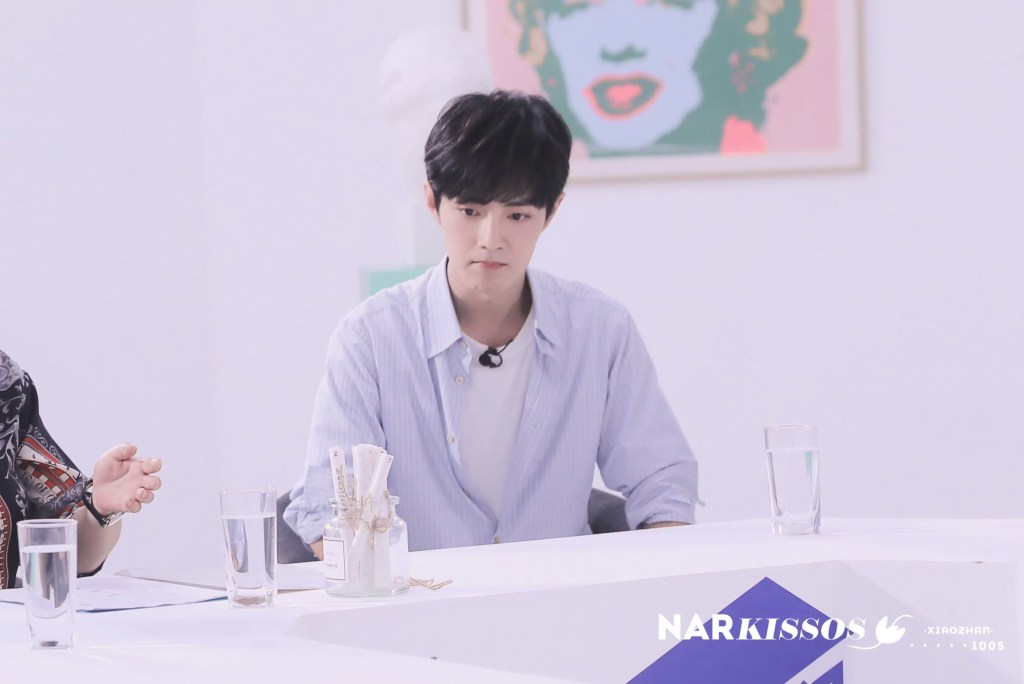
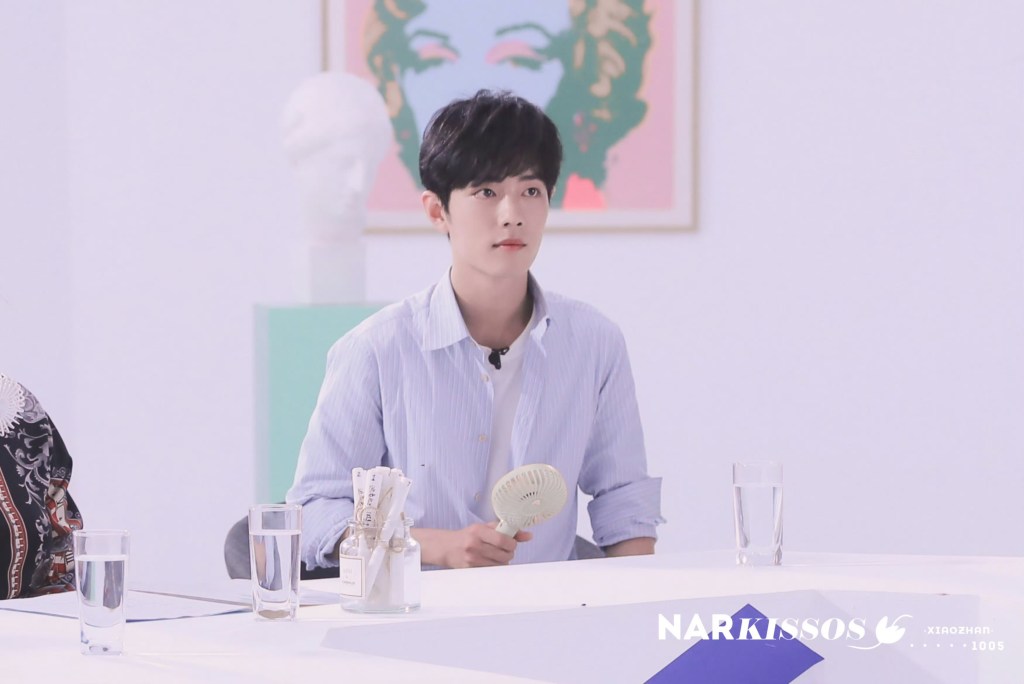
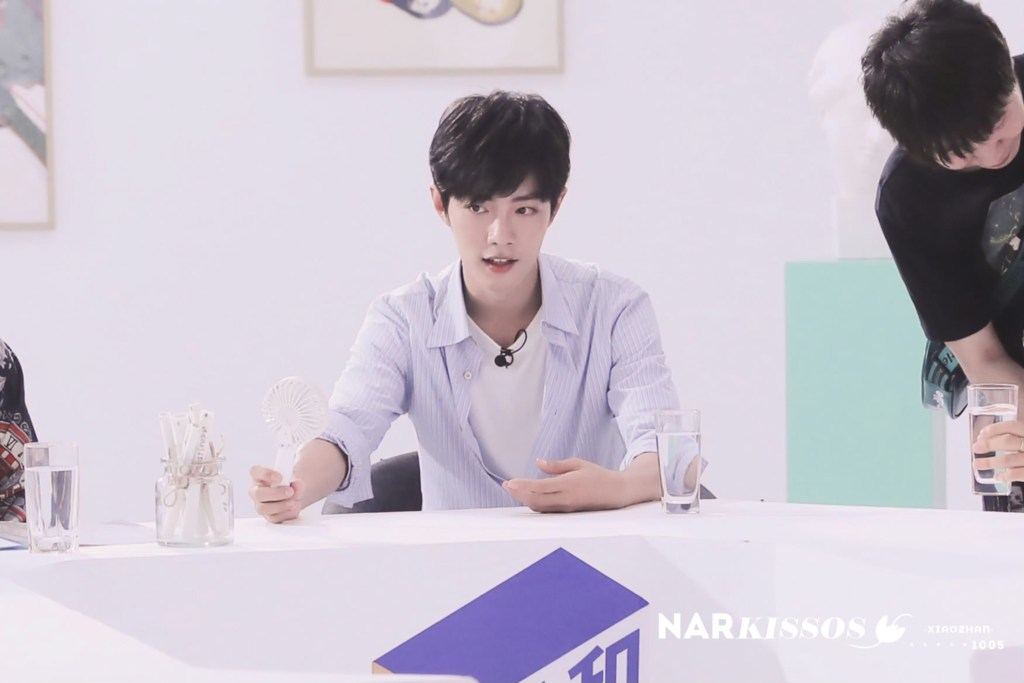
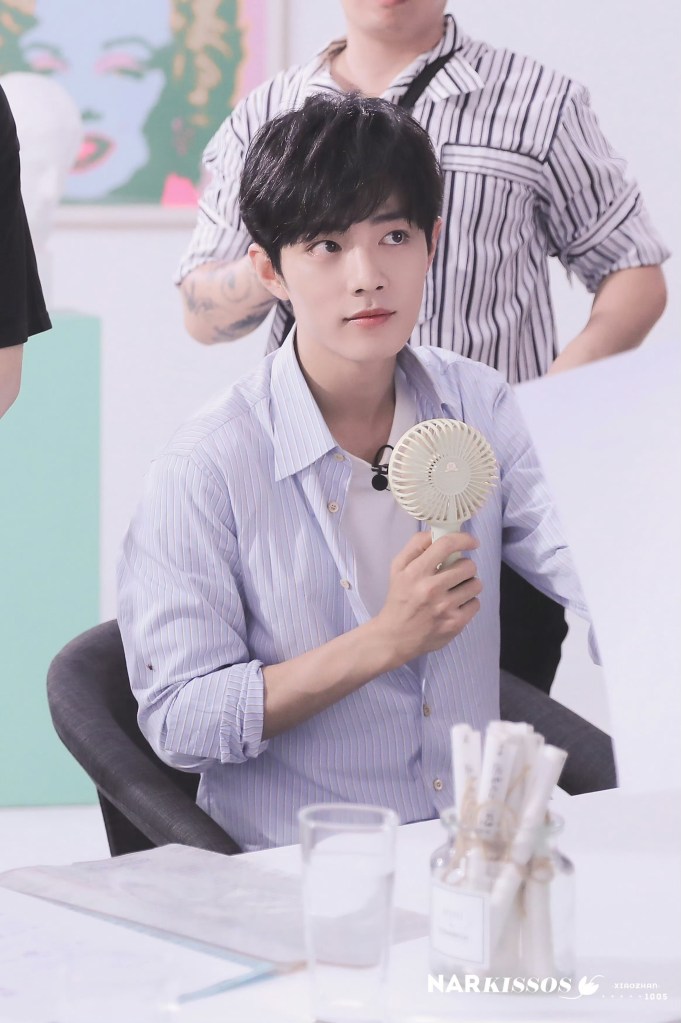
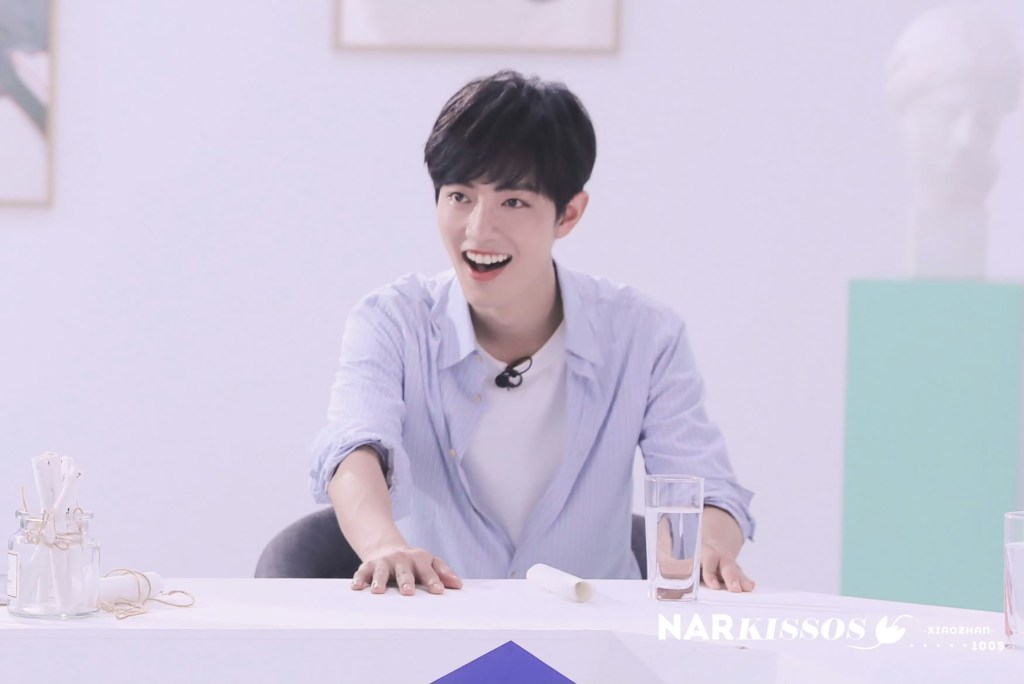

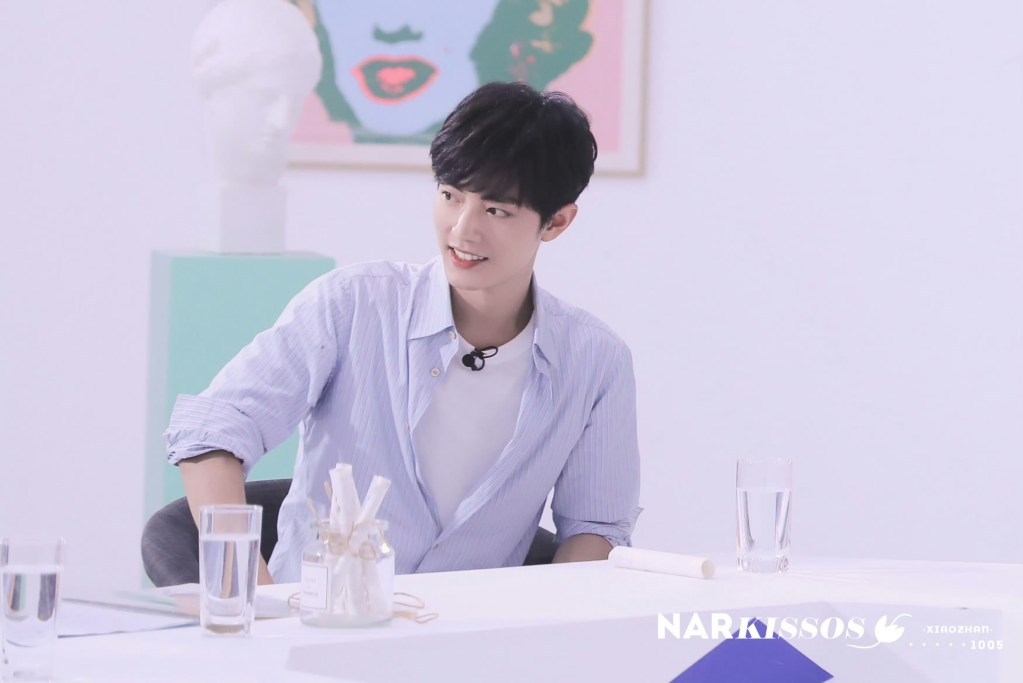
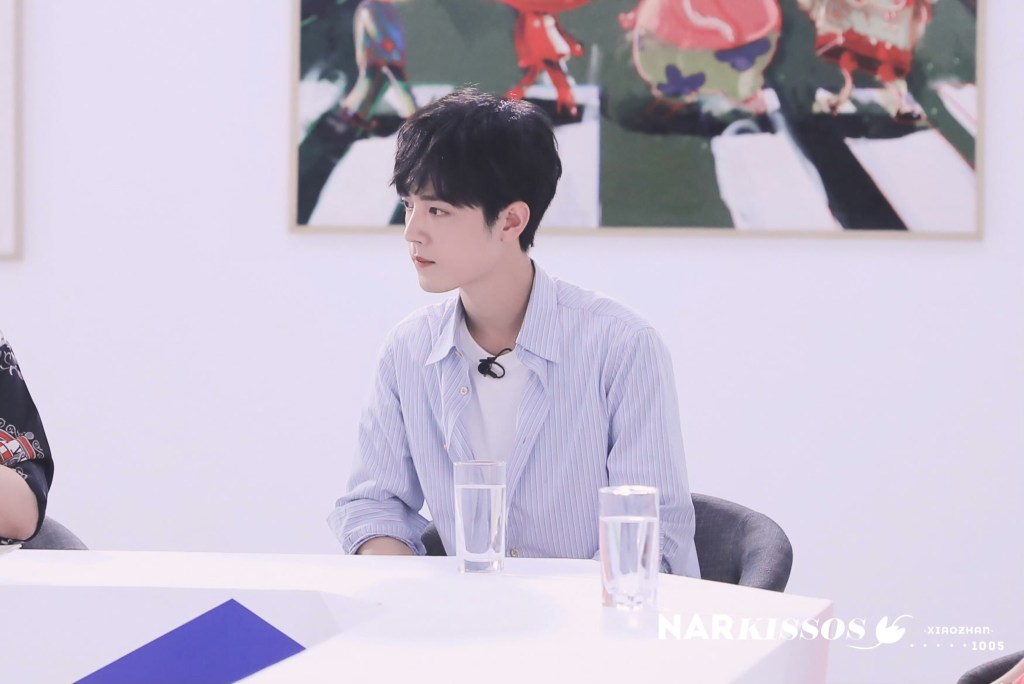
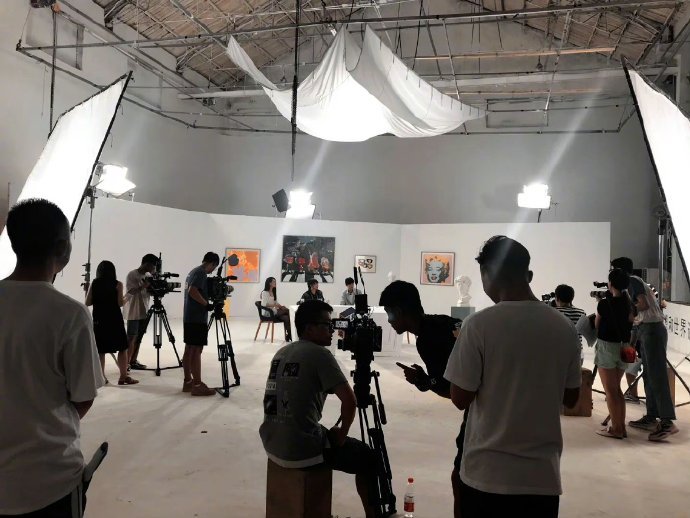

Fan Cam
Testimonial

This was probably Xiao Zhan’s “most difficult” recording.
~ Zhuang Jialong talks about Xiao Zhan (Behind-the-scenes celebrity story)
Xiao Zhan came to participate in our talk show “I Want to Talk to the World,” a program about young people supporting and comforting each other.
At the time, The Untamed was airing and gaining huge popularity. He arrived at the set early with his hair and makeup done, and even prepared a second outfit to change into for filming extra intro/outro clips. (There was actually no requirement for two outfits, but for the best program effect, they prepared one.)
But unexpectedly, in that relatively remote studio, there wasn’t a single enclosed private space where he could change clothes. Despite the large, open area of several hundred square meters, everything was exposed. Originally, they planned to use a car so he could change inside, but since other guests were about to arrive, he felt it was better to leave that time for everyone to rehearse and get familiar with each other first.
The key point is, he even comforted everyone, saying, “We didn’t bring it up in advance,” and added, “This outfit actually works really well with the setting.”
So thoughtful and considerate.
Still, it really felt like this was one of the most “helpless” moments in his career—wanting to change clothes but having nowhere to do it. It was just too difficult.
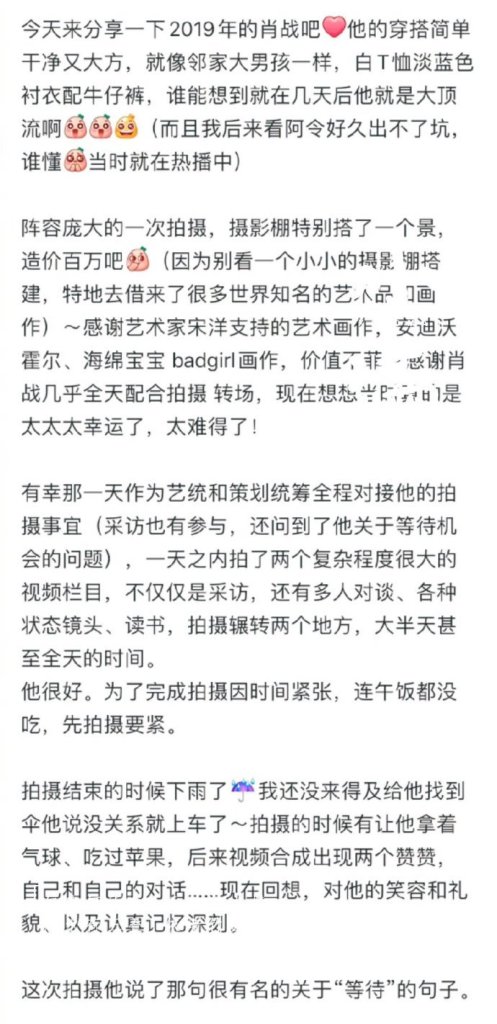
Today I want to share a look of Xiao Zhan from 2019.
~ The show’s coordinator and planner
His outfit was simple, clean, and effortless—like the boy next door. A white T-shirt with a light blue shirt layered over it, paired with jeans. Who could’ve imagined that just a few days later, he would become a top star?
(And later, I couldn’t get over The Untamed for the longest time—those who understand, understand. It was still airing back then.)
It was a large-scale shoot with a huge setup. The production team specially built a set that probably cost millions.
(Don’t be fooled by it looking like a small studio—many world-renowned artworks were specially borrowed for it.)
Thanks to artist Song Yang for supporting with the artwork, including pieces inspired by Andy Warhol, SpongeBob, and “badgirl”—they were incredibly valuable.
And thanks to Xiao Zhan, who basically spent the entire day cooperating with filming and moving between sets. Thinking back now, it really feels unbelievably lucky—such a rare experience.
I was fortunate enough that day to be the coordinator and planner working with him throughout the entire shoot (I also participated in the interview and even asked him a question about “waiting”).
In a single day, we filmed two highly complex video programs—not just interviews, but also multi-person discussions, various scene setups, reading segments, and shooting across two locations. It took most of the day, even the whole day.
He was really great. Because the schedule was so tight, he didn’t even eat—filming came first.
When filming wrapped, it started raining. I didn’t even have time to find him an umbrella before he said it was fine and got into the car.
During filming, there were moments where he held a balloon and ate an apple. Later, the video was edited together and showed two Zan Zan, a dialogue between himself…Looking back now, his smile, his politeness, and those vivid memories are still deeply etched in my mind.
During this shoot, he also said that very famous line about “waiting.”

There wasn’t even a proper place to use the restroom—the sink had no running water, and the bathroom was very rundown (even though the studio itself was large). At the time, no one expected that the artist we were filming would soon become a top star. He was handsome and very polite.
Also, when it started drizzling later, I didn’t have time to get him an umbrella, and he just got into the car.
Overall, it was a truly memorable shoot in my life. After that, I also became a fan of the drama.
Author’s reply:
This was our production’s planner and art coordinator for that recording—another little behind-the-scenes story.
To sum it up in one sentence: during those somewhat hectic days, he quietly became everyone’s “anchor,” the one who kept everything steady.
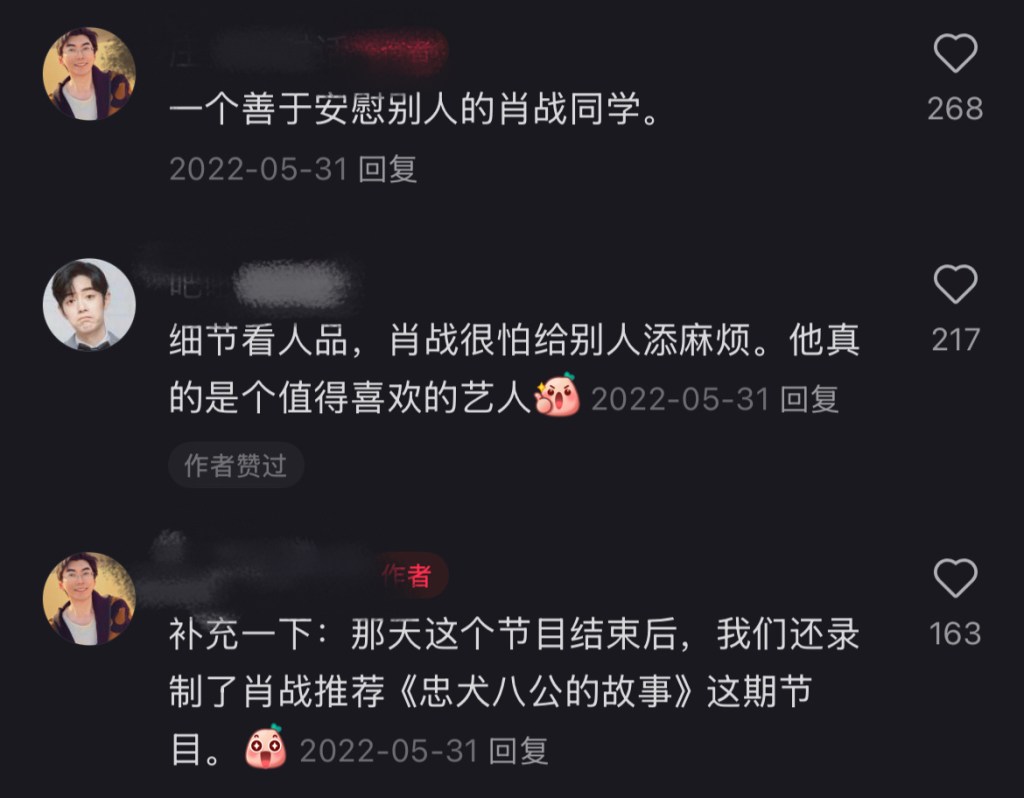
“Xiao Zhan is someone who is good at comforting others.”
“Details reveal a person’s character. Xiao Zhan is very afraid of causing trouble for others. He really is an artist worth liking.”
“To add: after the program ended that day, we also recorded an episode where Xiao Zhan recommended Hachiko: A Dog’s Story.”