

Original source │ ShiDian Figure │ August 8, 2019 │ 06:03
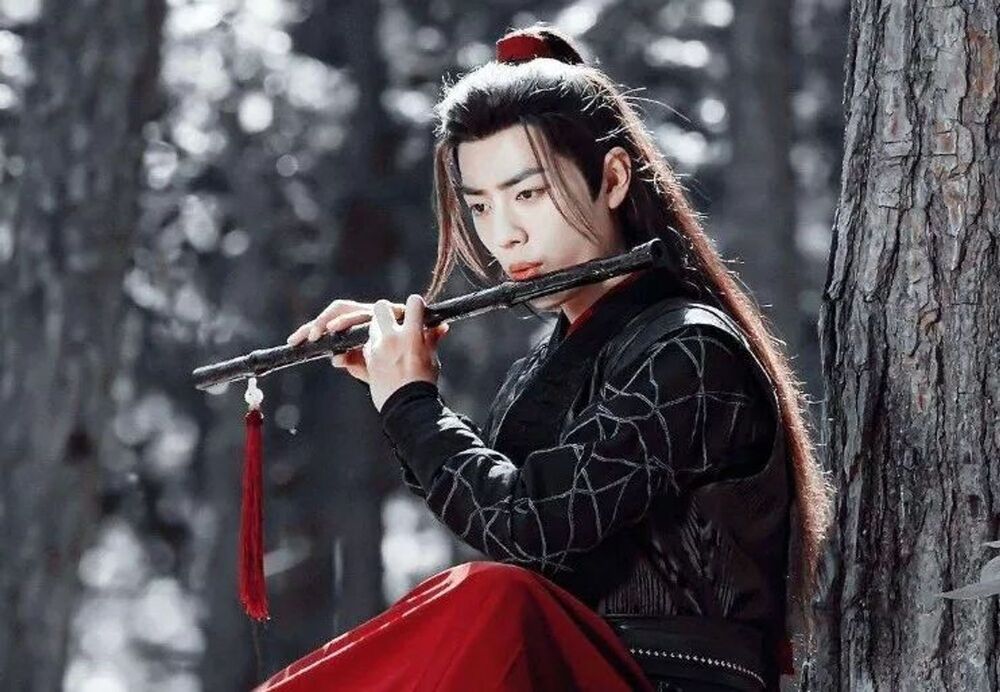
Beautiful young faces keep flooding our field of vision, one after another.
They appear in television dramas, commercials, giant posters at bus stops, and in young women’s social media feeds. If we were to make a list, it would be a very long one: some are stars cultivated by the Korean idol industry; some are idols produced through the “trainee” or “idol development” model; others have finally unleashed years of accumulated potential through a single film or television work, becoming the hottest names of the moment.
They often represent the most sought-after figures in the entertainment industry—those with the highest commercial value and the kind of data and statistics that leave people astonished.
Recently, Xiao Zhan has joined their ranks.
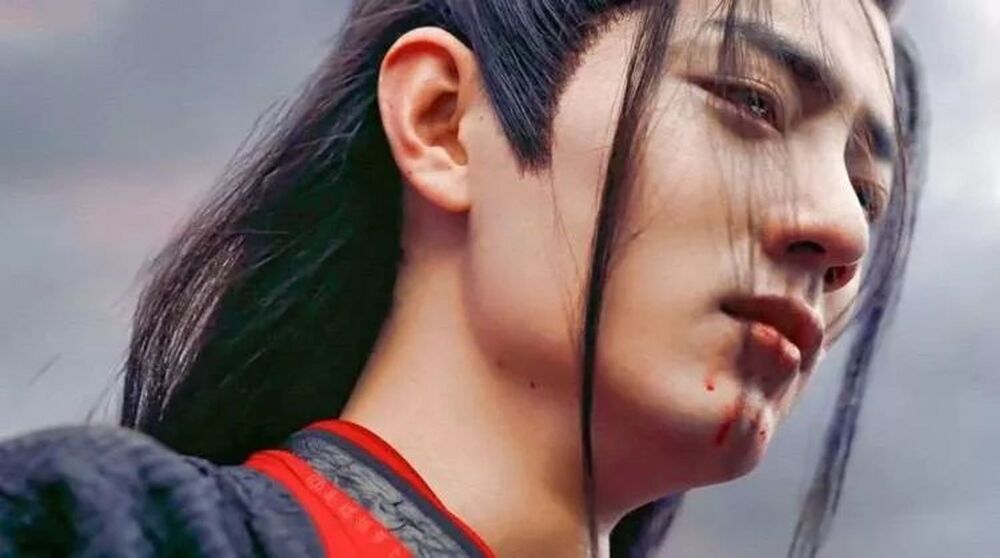
Thanks to his outstanding performance in the hit drama The Untamed (Chen Qing Ling), Xiao Zhan has gained hundreds of millions of views, attention, and online engagement. He is currently experiencing one of the brightest moments of his career.
When speaking about his “sudden fame,” he has always been candid about the fear it brings him. Yet when others try to probe the hardships he endured during the years before his breakthrough, he becomes increasingly matter-of-fact. He says that he was never waiting for an opportunity to arrive; instead, he was focused on doing his best in the present.
Now, fate has rewarded him.
Who is Xiao Zhan?
July 28, 2019, 2:00 PM — Beijing, inside a photography studio
Xiao Zhan walked into the studio through the entrance.
A blue long-sleeved T-shirt, black hair, and a height of 1.8 meters (5’11”)** were enough to make him the center of attention wherever he went. **article made a typo. Correct height should be 1.83 meters (6’0″)
Yet he did not carry the kind of aloof, “keep your distance” aura often associated with celebrities. On the contrary, he seemed like someone everyone felt comfortable approaching.
At times, he would even unconsciously reveal a mischievous, next-door-neighbor charm, casually chatting and joking with the staff around him.
That afternoon, they were filming a guest discussion program. Xiao Zhan was set to join Ma Weiwei, Qi Jinian, and Liu Yuanyuan in discussing a topic: Should young people stay in big cities to pursue their ambitions, or return to their hometowns in search of stability?
Before the program officially began, the guests first needed to film some promotional material.
Ma Weiwei displayed the same expressiveness that had made her stand out on U Can U Bibi. Her humor and wit quickly spread through the room, infecting everyone present—I found myself struggling not to laugh.
When Xiao Zhan stepped in front of the camera, however, everything seemed to settle down again. The onlookers appeared curious to see what this suddenly skyrocketing young star would do.
The host began asking questions, and Xiao Zhan looked at her attentively.
Throughout the entire day of filming, as well as during our conversation, he maintained an extraordinary level of focus. At times, it almost made you feel self-conscious. These days, it is surprisingly rare to encounter that look in someone’s eyes—the look that says, “I’m truly listening to what you’re saying.”
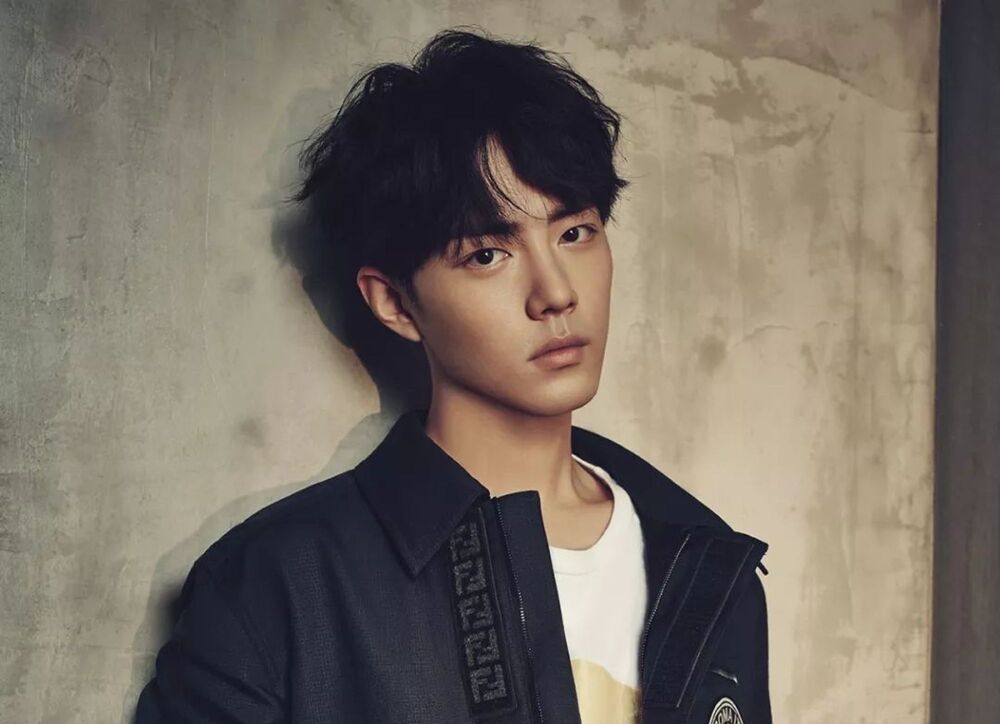
When faced with questions that were difficult to answer, Xiao Zhan‘s first reaction was to lower his head and smile. It was, in a way, his trademark.
While casting The Untamed, producer Yang Xia had once casually saved a photo of a young actor in costume. At the time, she didn’t know it was Xiao Zhan; she was simply struck by how infectious the smile in the photo was.
Of course, in the eyes of many people, qualities like these are not enough to distinguish him from other idols.
“Isn’t he just a bit better-looking than most people?” a man standing nearby quietly voiced what he was thinking.
Almost every year, a few young people suddenly become the center of public attention. Even if you don’t notice it yourself, their rapidly growing fan bases and the flood of products they endorse will quickly remind you of their presence.
I searched for “Xiao Zhan” on my social media feed and found hundreds of posts about him, most of them from the previous two months.
“Even Xiao Zhan crying looks beautiful! Such a sweet gege!”
“Xiao Zhan is literally Wei Wuxian himself. I’m officially hooked.”
Among the things most people know is that Xiao Zhan was not a complete newcomer to the entertainment industry. As early as 2015, he debuted through the talent-survival program X-Fire on Zhejiang Television, becoming a member of a boy group. He later transitioned into acting, and after appearing in several dramas, he landed the role of Wei Wuxian in The Untamed, the most popular xianxia adaptation of the summer of 2019.
The acting skills he displayed in the series, combined with an appearance that closely matched readers’ image of the original character, helped him gain tens of millions of followers on Weibo in less than two months. It also made him the male entertainer whose rise to fame was arguably the fastest that summer.
I approached all of this with a simple question: Who is Xiao Zhan?
After consuming a great deal of content about him, I became intensely curious about the overwhelming scale of support surrounding him. I wanted to understand, through an interview, why him?
It was not an easy question to answer.
July 28 was a weekend, but for Xiao Zhan, it was simply another day packed with high-intensity work.
After finishing the promotional filming, he moved to the discussion set, which consisted of three white tables arranged together, and waited for the official recording to begin. While the crew adjusted the cameras and equipment, he continuously used a small handheld fan to fend off the stifling heat inside the studio.
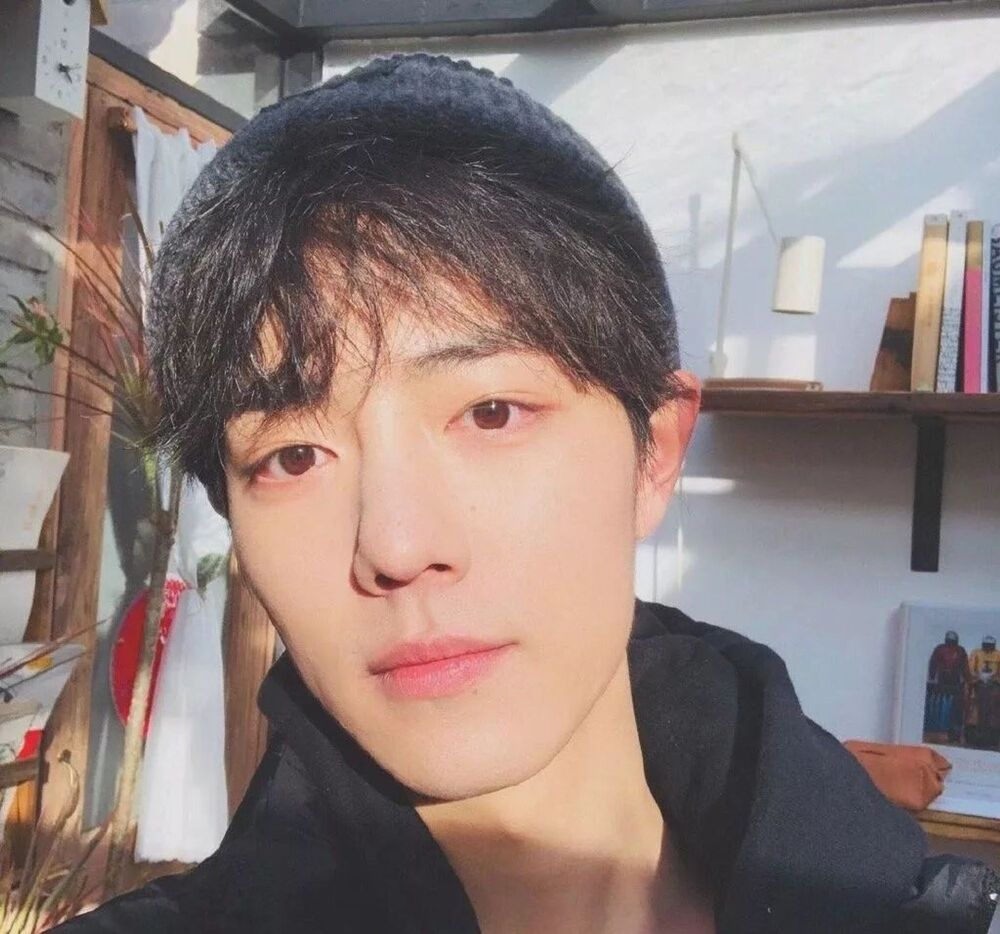
Beads of sweat had already formed on Xiao Zhan‘s forehead, yet he continued to sit there smiling, serving as an exceptionally patient listener.
“Ninety-nine percent of the people here today are your fans…” Ma Weiwei introduced Xiao Zhan in her trademark teasing manner.
Xiao Zhan broke into a smile. “I’m still very nervous, even now. I was chatting with the teachers here just now, and everyone’s ability to express themselves is really impressive.”
This was not false modesty or an attempt to downplay himself—it was simply an attitude of humility.
Among everyone present, Ma Weiwei understood that better than anyone.
A down-to-earth person
July 28, 2019, 3:00 PM — Beijing, recording site of I Want to Talk to the World
This was the second time Ma Weiwei and Xiao Zhan had met.
The first time was on a discussion program where they spent a great deal of time talking about topics related to physical appearance and attractiveness.

It was a well-worn topic, and one that often prompted the kind of standard, polished answers idols are expected to give. For example:
“A beautiful appearance or an interesting soul—which would you choose?”
“An interesting soul.”
Very few people choose “a beautiful appearance,” because they worry about being seen as superficial. But Xiao Zhan did not shy away from the question at all.
“Everyone is naturally drawn to beauty, and society does tend to give beauty a kind of priority pass. Whether you’re working or making friends, people usually make an initial judgment based on appearance,” he said. “An ‘interesting soul’ is something you discover only after getting to know someone, because it’s not something you can see at first glance.”
“So you’re saying you can’t accept someone with low attractiveness?” Ma Weiwei asked.
“Everyone’s standards of beauty are different. Someone you think is a ten might only be a six in another person’s eyes. And someone who scores a five for others might be an eight to me.”
That was Xiao Zhan’s answer—and it reflected a pattern often seen in him: he tended to step outside established ways of thinking rather than simply follow them.
In a way, it was a metaphor for his own life.
Before officially entering the entertainment industry, Xiao Zhan, a graduate of Chongqing Technology and Business University, was actually a designer. As early as his sophomore year, he and several friends had founded a small design studio, taking on logo and visual identity (VI) projects and occasionally participating in design competitions.
After graduation, he continued working in the design field.
Then, while searching for contestants for X-Fire, the show’s director came across a photograph of Xiao Zhan and proactively reached out to him.
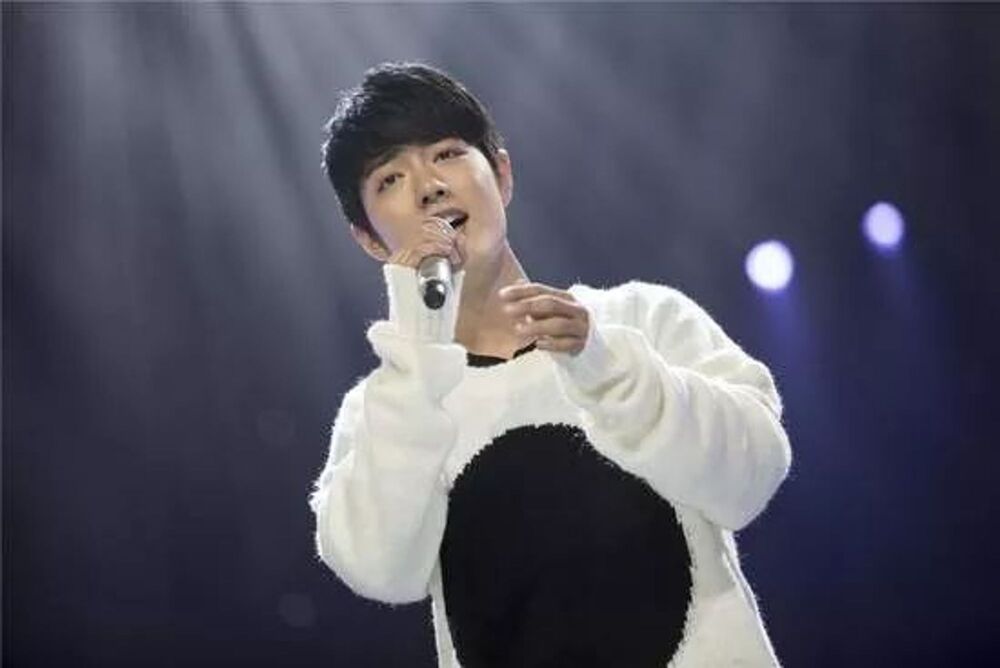
“At the time, I had already graduated and was working at a design studio run by one of my media professors. The environment was pretty good in every respect. The director asked me, ‘Do you want to come?’ And I said, ‘Oh, sure. I’ll come and give it a try…’” he explained.
Back then, Xiao Zhan had no particular ambition to break into the entertainment industry. During the interview, he also rejected the conventional “hero story” narrative—the idea of a young man from a comfortable background abandoning a stable life to pursue stardom.
“Nobody dislikes stability. It’s just that an unknown future naturally sparks curiosity. Maybe it was precisely that curiosity that kept me moving forward.”
Then, with a laugh, he added that if he had known in advance everything he would go through, he might not have gone at all.
Becoming an entertainer did not immediately bring Xiao Zhan a smooth and effortless career. Before being cast in The Untamed, he experienced a period of relative inactivity. During the interview that day, journalists and hosts kept returning to that phase, intentionally or otherwise.
“Were you always optimistic during that time? Did you ever feel discouraged…?”
As the interview progressed, a female reporter cautiously cast out her “bait.” Standing nearby, I could sense her dilemma: she wanted to understand the pain Xiao Zhan experienced during that period, but she was also afraid of offending a star whose career was rapidly ascending.
Xiao Zhan neither avoided nor downplayed the question.
He admitted that there was indeed a period when he doubted himself. “I didn’t know which direction I should be heading in.”
At the time, he bought an elliptical machine. Whenever he felt overwhelmed, he would work up a sweat to release the frustration. During the rest of his time, he chose to keep studying—taking acting classes, dance classes, and vocal training simultaneously.
He did not consider this “optimism.” To him, it was simply facing life directly and focusing on what he could do in the present.
“The reason I felt I needed to keep doing my job well was because I believed that if an opportunity came, whether I could seize it would depend on the preparation I’d accumulated beforehand. If an opportunity arrived and I still weighed 150 jin (about 75 kg / 165 lbs), I might not be able to seize it, right?”
Ma Weiwei felt that Xiao Zhan was different from many other celebrities.
On a previous discussion program, they had talked about the question:
“I’m 28 years old, I’ve accomplished nothing—should I still stay in a big city?”
When it was Xiao Zhan’s turn to speak, his very first sentence was:
“The first thing you need to consider is your family’s actual circumstances…”
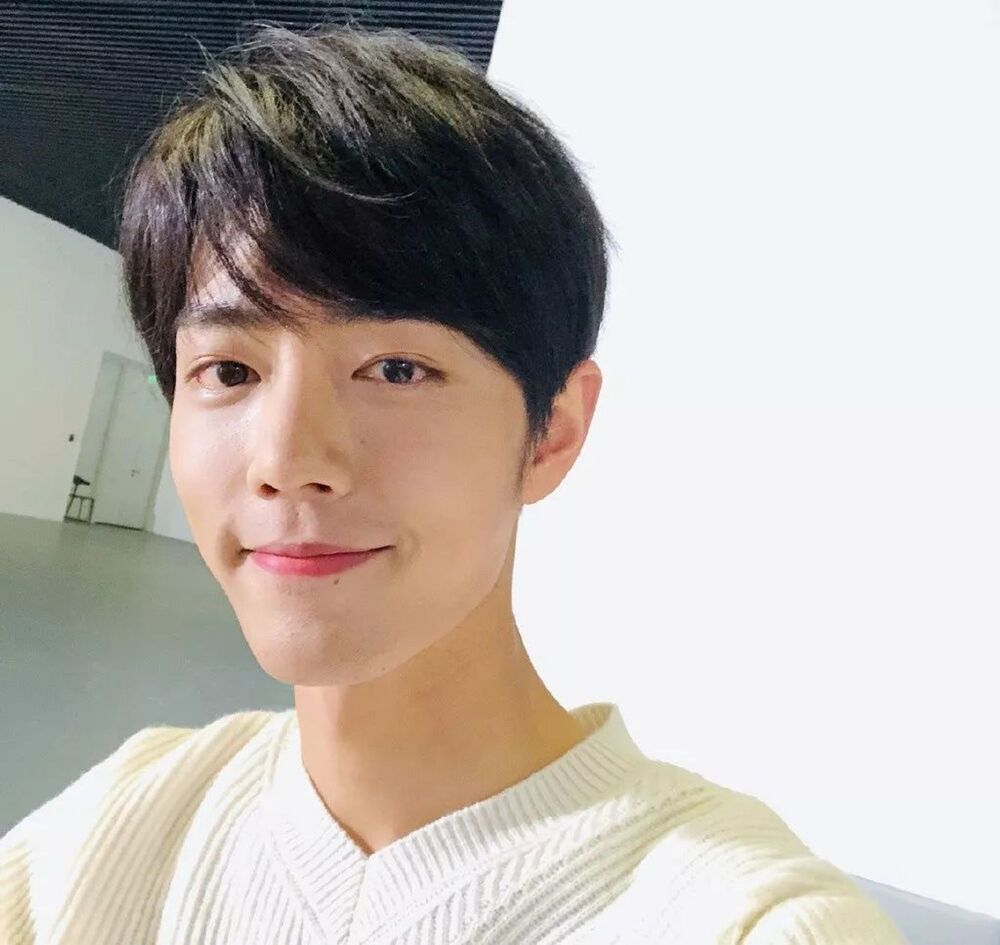
“Xiao Zhan is, in my opinion, a very down-to-earth idol. Other celebrities at this point would usually say something lofty like, ‘You should stick to your dreams,’ but Xiao Zhan first tells you to consider your family’s actual situation.”
Ma Weiwei said with a smile. This time, her tone was not teasing, but appreciative.
Actor
July 20, 2019, 11:00 AM — Tencent Video, Episode 20 of The Untamed
Before the interview, I had watched Episode 20 of The Untamed. It depicts the storyline three months after Wei Wuxian falls into the Burial Mounds and later returns to life.
Because he cultivated the demonic path while in the Burial Mounds, the current Wei Wuxian is already very different from the carefree, mischievous young nobleman he once was.
This kind of performance is much more difficult than scenes of intense crying or laughter. It requires a subtle sense of control that is hard to master. If you underplay it, the audience won’t perceive that the character has undergone a major transformation; if you overplay it, the character can end up feeling like two different people.
Xiao Zhan‘s interpretation in this episode struck me because his performance was just right.
Producer Yang Xia believed this was related to Xiao Zhan’s real-life experience and his ability to accurately interpret the script:
“Xiao Zhan’s state in that episode was very natural and relaxed. Wei Wuxian is still smiling, but there is no longer any real smile in his eyes. His way of speaking hasn’t changed much, but earlier he was truly joking—now it feels a bit like putting on an act. That’s why Lan Wangji tells him, ‘Wei Ying, don’t force yourself to act like you’re joking.’”
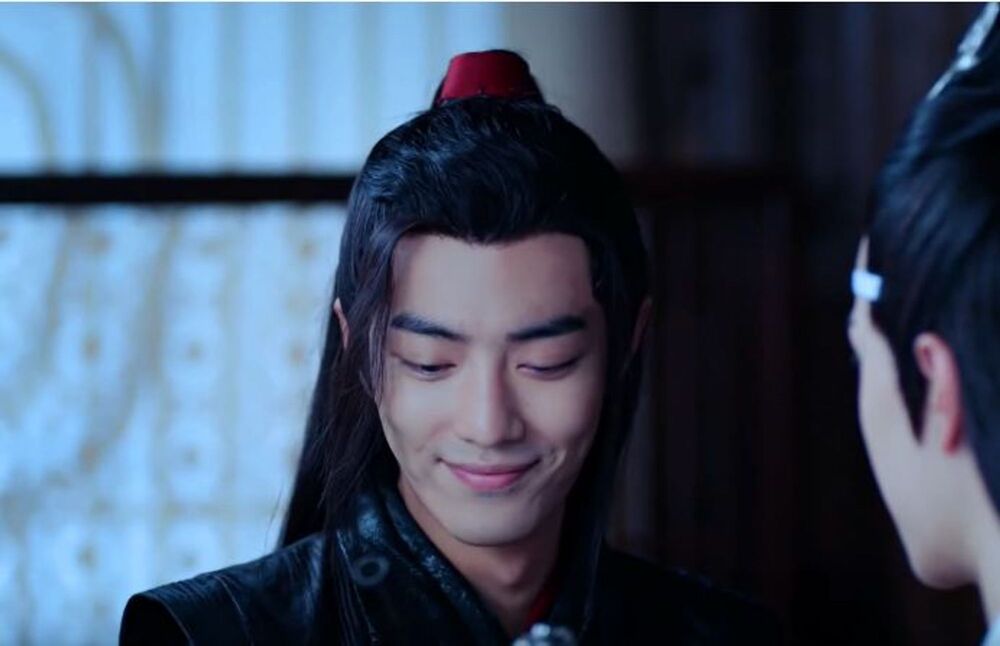
Before filming officially begins for each project, Xiao Zhan goes through the script several times until he fully understands it.
“The first time, I look at what kind of person this character is,” he said. “The second time, I study his story arc, his relationships, and where the turning points are. I’ll read it many times. Each pass has a different focus and does different work, but the only constant is that I need to fully immerse myself in the character.”
To some extent, his background in design has helped him, giving him “stronger observational skills for characters than others.” According to him, as early as high school, he had already begun “using anthropomorphized animals to express his emotions.”
In fact, when he first started acting, Xiao Zhan did not feel as comfortable as he does now. He felt that performing as another person under the gaze of everyone—and convincing the audience of it—was extremely difficult.
At that time, he would shoot during the day and seek guidance from teachers at night. “The teacher said, ‘You have to truly believe that you are that person.’ The principle is easy to understand, but it’s very difficult to actually do,” he said. Xiao Zhan often watched playback on set, but during that period he constantly felt that what he had performed and what finally appeared on screen did not feel like the same person.
“It was painful. At that stage, everyone might say, ‘Just do it like that,’ but I would think to myself—‘Even doing it like that doesn’t feel quite right.’”
This mindset pushed Xiao Zhan to seek advice from acting coaches more and more frequently, and the results of his learning gradually began to show in his performances.
Xiao Zhan admits that at this stage, his acting still contains more emotional intuition than rational control. “If I want to continue down this path, I also need rationality. So outside of filming, I’m taking professional acting classes.”
Professional training is helping him understand his own performances more analytically. One of the most memorable was a late-night scene where Wei Wuxian sneaks into a mourning hall to watch his senior sister keeping vigil, and then escapes pursuit.
“I still remember it clearly. It was extremely hot that day, and I had to keep running while also carrying the emotional breakdown from the previous scene. At one point, I suddenly knelt down and fell forward into the dirt. During that take, I actually blacked out for two seconds. The director thought I had planned it, so he didn’t call cut…”
“In that moment, I really felt it—‘Oh! So this is what dizziness actually feels like!’” he said excitedly, as if all the fatigue from continuous work had completely disappeared.
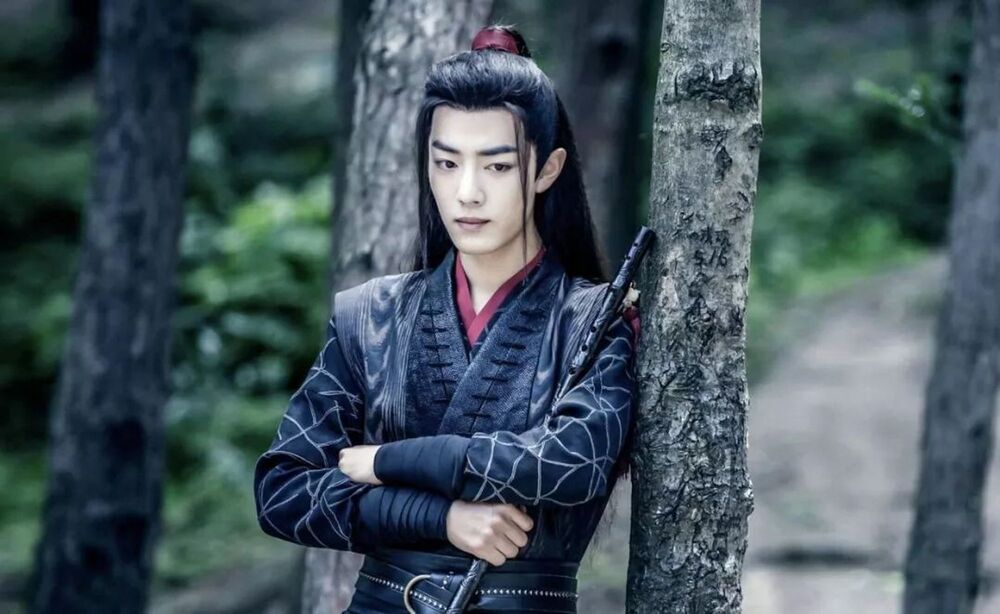
“I’m wary of being overhyped and then brought down”
July 20, 2019, 8:20 PM — Beijing, a design studio
At 5 p.m., the filming location shifted to the northeastern corner of Beijing. By then, dark clouds had already pressed down on the skyline. The heavy, overcast sky seemed to foreshadow a storm that was waiting to break.
Xiao Zhan still could not rest. After completing interviews and photo shoots with several media outlets, he finally returned to a prepared lounge. There were not many people in the room anymore, and no cameras. This might have been one of the few moments in the day when he could truly relax.
Xiao Zhan sat next to me, his long legs having nowhere to settle comfortably. He looked slimmer than he did on camera, and his reddened eyes reflected his fatigue—but it was only physical exhaustion. Having taken part in such an intense round of promotional work for the first time, he was still feeling “quite excited.”
I expressed a great deal of curiosity about him, and the “patient listener” I had seen throughout the day never disappeared.
As we talked, the conversation once again returned to the “two or three years” that had been mentioned repeatedly that day. I told Xiao Zhan that I felt he was a person who gave others a sense of security, which was why he didn’t seem to show the same level of panic as others during that period.
“Since I was young, I always felt my family was very good—a very warm family. My parents have a very good relationship… When I look back at those years, they were actually quite good. I always had things to do, I was still filming. Wasn’t that already pretty good?” he said.
Compared with career instability, what Xiao Zhan feared more was becoming a “formulaic” person—when a scene could no longer emotionally move him, he felt that would be the most painful thing.
“But your life has already become quite routine—everything happens at fixed times, and you have to do certain things at specific moments,” I countered.
“Then you just can’t let that happen when you’re acting!” Xiao Zhan replied. He knew he was a “late entrant” into the field, and still had many areas to improve in performance. So it was better to keep life simple and focus his energy on acting.
At times, I wondered whether the enormous fame he gained in such a short period would have an impact on him. Some people told me “no,” because “Xiao Zhan has real-life experience.” I also tended to agree with that view, because he grew up in a relatively open environment, received a good and complete education from an early age, and after entering the entertainment industry, he was able to channel more of his energy into his craft.
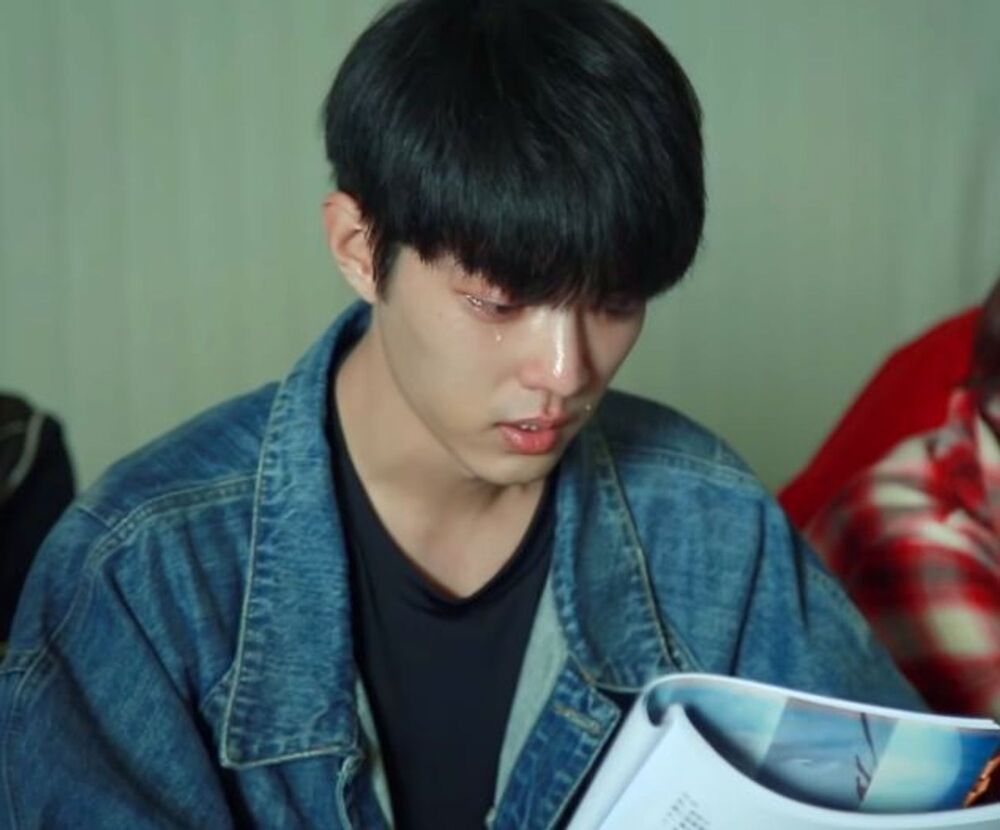
Xiao Zhan says he is “afraid of being overpraised to the point of harm.” In several recent interviews, he has repeatedly mentioned this feeling.
Before entering the industry, he even made an agreement with a very close friend: no matter what happens, they should always tell each other the truth.
There is no way to verify this, but one obvious detail that day was that throughout the entire intense workload, Xiao Zhan did not show the slightest hint of arrogance. He maintained the same level of humility, politeness, and gentle manner of speaking toward almost everyone.
“I’m like this in private too. I’m still the same ‘Xiao Zhan’—there’s no need to deliberately maintain anything,” he said.
As the interview drew to a close, he naturally patted me on the shoulder and suggested, “Let’s talk again next time.”
The next shoot took place on the balcony of the third floor of the studio. Suddenly, thunder and lightning filled the sky, and the staff around him became somewhat flustered.
In the darkness, Xiao Zhan picked up a paper airplane in his hand and threw it forward with all his strength.
Image source: the internet; provided by Xiao Zhan’s team; the main header image is from Weibo @sky夏日么么茶x.
References:
- Yuli Studio: “We are directors and producers, this is how we worked with Xiao Zhan on set | 20 things about ‘The Untamed’”
- The Paper: Interview | Xiao Zhan: I’m not ready to be an idol yet